
Riveting Tools for Sign Fabrication: Rivet Guns & Rivet Nuts
Pneumatic rivet guns for production speed, blind rivet nuts for threaded anchor points, and specialized pliers for 3D letter work — the complete guide to riveting tools every sign fabrication shop needs.

Pneumatic rivet guns complete 2-3x more rivets per hour than manual tools with consistent pull force (8-12 kN), making them essential for any shop producing 50+ channel letters per day. Blind rivet nut tools turn thin sheet metal (0.5-1.5mm) into threaded anchor points capable of accepting M3-M8 machine screws — a function that manual pop rivets cannot provide. For shops producing fewer than 20 letters per day, manual rivet tools remain cost-effective at 20-30% of the pneumatic tool price.
Most sign components — channel letter backs, mounting plates, aluminum profiles — are thin sheet metal. Welding is overkill, screws alone can loosen, and adhesives don’t bond well to metal surfaces that flex. The solution: riveting.
This guide covers the riveting tools every sign fabrication shop needs, from pneumatic rivet guns for production work to blind rivet nuts for creating threaded mounting points in thin panels.
Good riveting tools help sign shops join thin metal parts, brackets, panels, and support hardware without slowing production.
When buying riveting tools, check rivet size range, grip strength, operator comfort, and spare part availability.
Why Riveting Beats Screws and Welding for Sign Making
For assembling sign components, rivets offer three key advantages:
- No heat distortion — unlike welding, riveting doesn’t warp thin metal panels or discolor anodized aluminum
- Vibration resistance — properly set rivets don’t loosen over time like screws can
- One-sided access — blind rivets (pop rivets) can be set from one side, essential when you can’t reach the back of the panel
- Clean appearance — rivet heads sit flush or nearly flush, with no protruding screw threads
Good riveting tools help sign shops join thin metal parts, brackets, panels, and support hardware without slowing production.
When buying riveting tools, check rivet size range, grip strength, operator comfort, and spare part availability.
Pneumatic Rivet Gun: The Production Workhorse
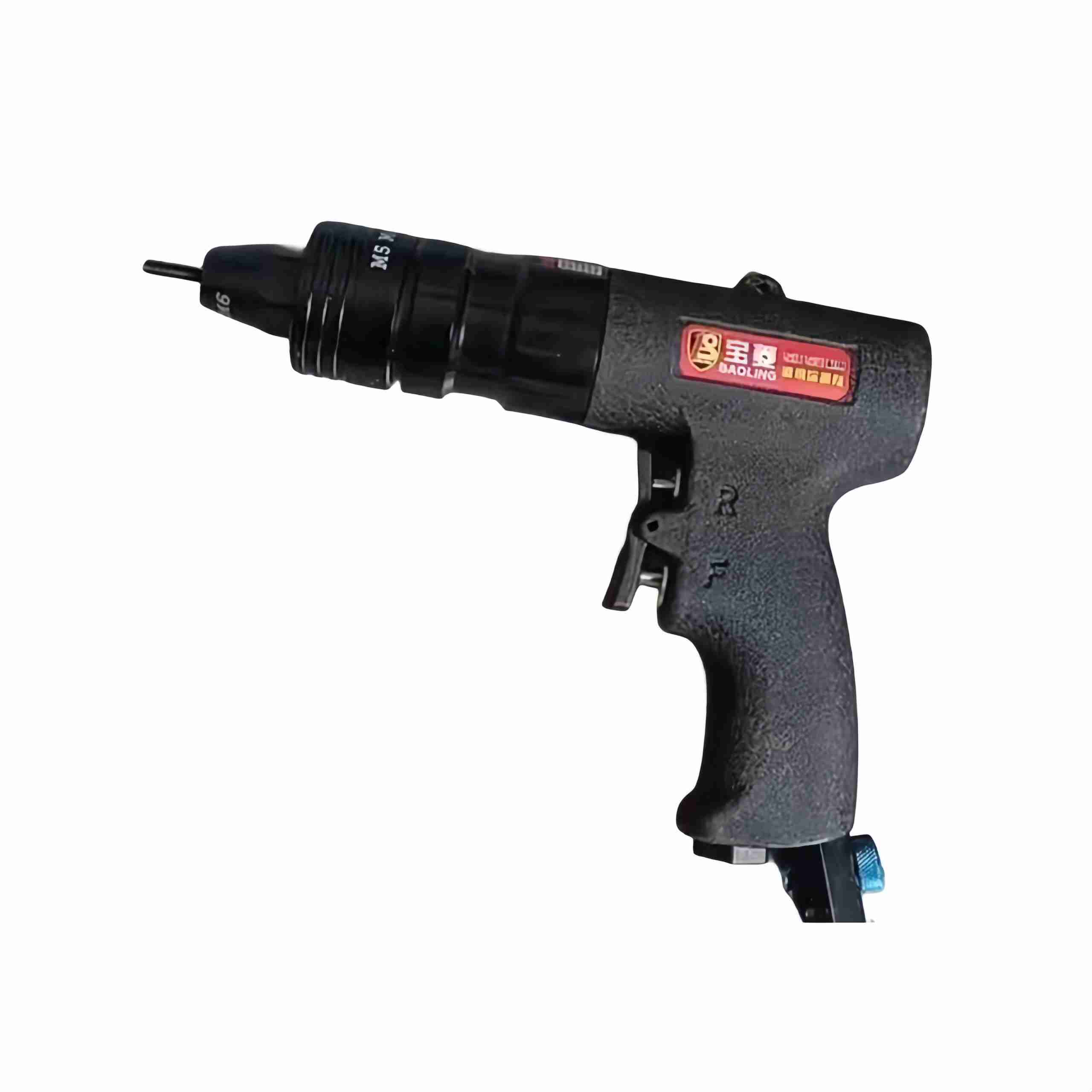
The pneumatic rivet gun is the most important fastening tool in a mid-to-large sign shop. It uses compressed air to pull the rivet mandrel and set the rivet in under a second — far faster than manual rivet tools.
Key Features
- Speed — sets a rivet in 0.5–1 second per cycle, compared to 3–5 seconds with a manual tool
- Consistency — air pressure delivers the same pull force every time; no variation from hand fatigue
- Capacity — handles rivets up to 4.8mm diameter in standard models (6.4mm in heavy-duty versions)
- Ergonomics — minimal hand strain, critical for shops that set hundreds of rivets per day
Typical Applications
- Assembling channel letter backer panels to frames
- Attaching aluminum mounting brackets to sign cabinets
- Fastening metal trim and edge profiles to sign housings
- Production line assembly of standard sign components
Setup requirement: needs a compressed air supply (6–8 bar / 90–120 PSI). If your shop already has an air compressor for other pneumatic tools (like the pneumatic drilling gun), adding a pneumatic rivet gun is straightforward.
Good riveting tools help sign shops join thin metal parts, brackets, panels, and support hardware without slowing production.
When buying riveting tools, check rivet size range, grip strength, operator comfort, and spare part availability.
Blind Rivet Nut System: Creating Threaded Points in Thin Metal
Sometimes you don’t just want to fasten two panels together — you need a threaded hole in a thin metal panel so a bolt or screw can be inserted later. That’s where blind rivet nuts come in.
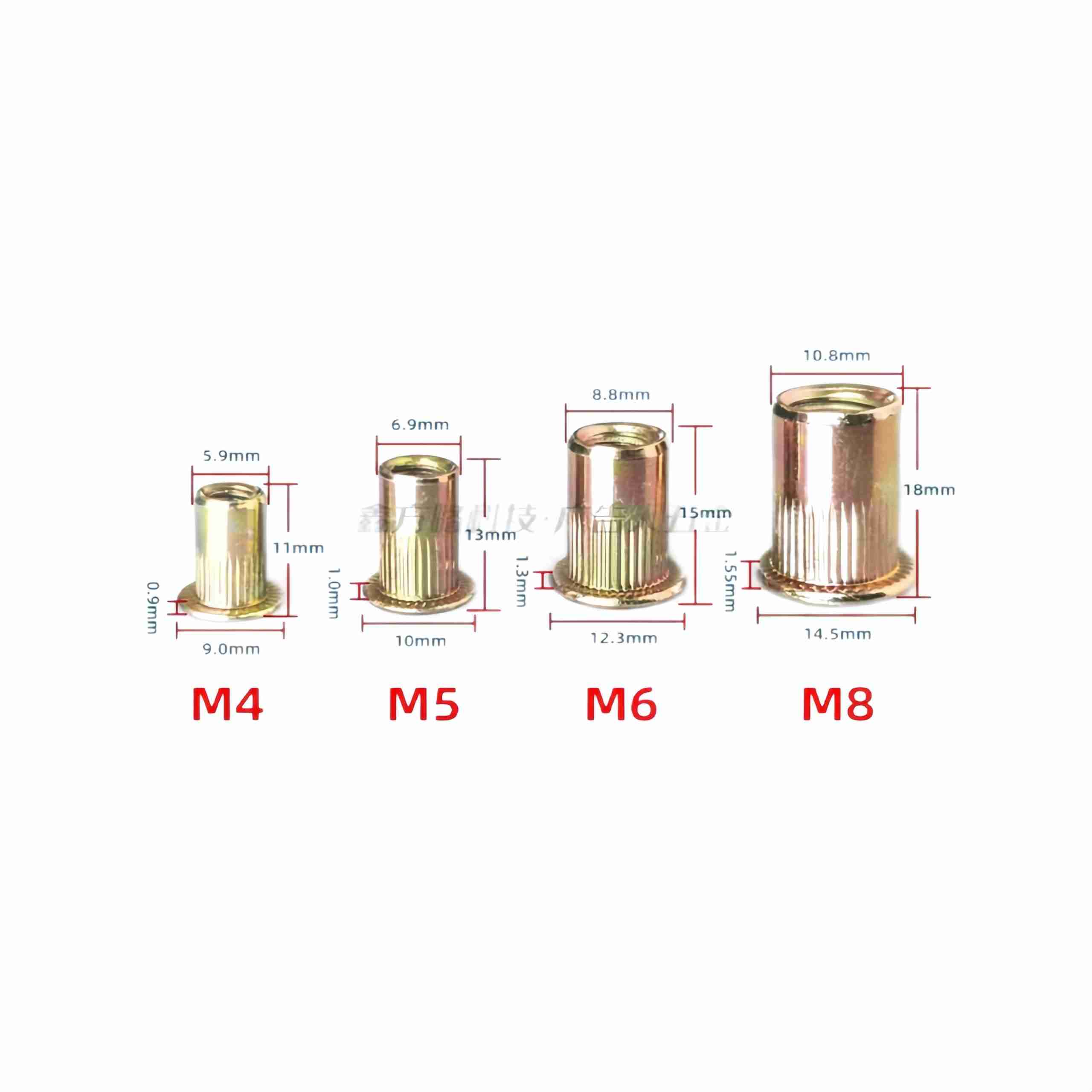
A blind rivet nut (also called a rivnut or threaded insert) is a tubular rivet with internal threads. When set, it creates a strong threaded anchor point in sheet metal — just like a captive nut, but installed in seconds without access to the back of the panel.
Common uses in sign making:
- Creating mounting points for sign faces on aluminum frames
- Threaded anchor points on stainless steel letter housings for wall mounting
- Adding bolt-down points to thin aluminum sign cabinets (where tapping threads into thin metal isn’t feasible)
- Providing re-usable threaded points for signs that need periodic access (service panels, removable covers)
The blind rivet nut tool is the setting tool that compresses the rivet nut, expanding it against the back of the panel to lock it in place. The compression process — we deform the rivet nut body against the back surface of the sheet metal — creates a mechanically strong joint. Once set, the rivet nut stays put even under vibration and thermal cycling.
The tool works similarly to a rivet gun: insert the mandrel into the rivet nut threads, place it in the pre-drilled hole, squeeze to deform and set. The result is a permanent threaded insert in seconds.

Good riveting tools help sign shops join thin metal parts, brackets, panels, and support hardware without slowing production.
When buying riveting tools, check rivet size range, grip strength, operator comfort, and spare part availability.
Manual Punch Pliers: For Low-Volume and Field Work
Not every shop runs a production line. Manual punch pliers are the hand-operated alternative — no air compressor, no electricity, just mechanical leverage.
- Small shops producing 10–50 signs per week
- Field installations where compressed air isn’t available
- One-off custom projects where setup time for pneumatic tools isn’t justified
- Budget-conscious startups building up their tool inventory gradually
The trade-off is speed and hand fatigue — manual pliers require significant grip strength for larger rivets and are slower per cycle. For shops planning to grow, starting with manual pliers and upgrading to pneumatic when volume justifies it is a sound approach.
Good riveting tools help sign shops join thin metal parts, brackets, panels, and support hardware without slowing production.
When buying riveting tools, check rivet size range, grip strength, operator comfort, and spare part availability.
Punching Pliers for 3D Characters: A Specialized Tool
3D fabricated letters (built-up letters, channel letters with complex shapes) often need fastening points in curved or hard-to-reach areas. The punching pliers for 3D character are designed specifically for this task — their angled head reaches into tight spaces that a standard rivet gun can’t access.
This tool is essential for mounting hardware on curved letter returns and inside narrow channel letter profiles.
Good riveting tools help sign shops join thin metal parts, brackets, panels, and support hardware without slowing production.
When buying riveting tools, check rivet size range, grip strength, operator comfort, and spare part availability.
Rivet Size Selection Guide
| Material Thickness | Rivet Diameter | Rivet Material | Typical Use |
|---|---|---|---|
| 0.5–1.0mm | 3.2mm (1/8″) | Aluminum | Light trim, decorative panels |
| 1.0–1.5mm | 4.0mm (5/32″) | Aluminum / Steel | Standard sign assembly |
| 1.5–2.5mm | 4.8mm (3/16″) | Steel | Structural connections, heavy housings |
| >2.5mm | 6.4mm (1/4″) | Steel / Stainless | Load-bearing mounts, large cabinets |
Good riveting tools help sign shops join thin metal parts, brackets, panels, and support hardware without slowing production.
When buying riveting tools, check rivet size range, grip strength, operator comfort, and spare part availability.
Workshop Setup: What You Need
A properly equipped sign fabrication shop should have:
- One pneumatic rivet gun (production) or manual punch pliers (low volume)
- A supply of blind rivet nuts in common sizes (M4, M5, M6)
- One blind rivet nut tool
- Punching pliers for 3D character (for built-up letter work)
- Assorted rivets in aluminum and steel, 3.2mm–4.8mm diameters
For the complete workshop equipment checklist covering drilling, fastening, welding, and testing tools, see the pillar page: Essential Tools Every Sign Shop Needs.
Good riveting tools help sign shops join thin metal parts, brackets, panels, and support hardware without slowing production.
When buying riveting tools, check rivet size range, grip strength, operator comfort, and spare part availability.
Related Categories and Articles
- Browse all Workshop Tools
- For fasteners used with rivet nuts: Screw & Bolt selection
- Fastener Guide for Sign Makers — screws, nuts, and clips overview
- Drill Bits for Sign Making — the companion guide to drilling before riveting
Good riveting tools help sign shops join thin metal parts, brackets, panels, and support hardware without slowing production.
When buying riveting tools, check rivet size range, grip strength, operator comfort, and spare part availability.
Summary
Pneumatic rivet guns are the production-speed choice for assembling sign components. Blind rivet nut tools add threaded anchor points to thin sheet metal in seconds — invaluable for signs that need removable panels or bolt-down mounting. Manual punch pliers cover low-volume work and field installations, while specialized 3D character pliers handle the tight spaces in built-up letter fabrication.
Equipping your workshop with these tools makes fastening faster, stronger, and more consistent than screws alone. For wholesale pricing on riveting equipment and all sign-making supplies, contact us — we supply sign shops across Southeast Asia from verified Chinese manufacturers.
Good riveting tools help sign shops join thin metal parts, brackets, panels, and support hardware without slowing production.
When buying riveting tools, check rivet size range, grip strength, operator comfort, and spare part availability.
FAQ
Q: Pneumatic vs manual rivet gun?
A: Pneumatic: 8-12 kN consistent pull force, 2-3x speed, recommended for 50+ letters/day. Manual: adequate for low-volume shops, lower initial cost. Both accept standard blind rivets (2.4-6.4mm diameter).
Q: What size rivet for 1mm aluminum sheet?
A: 3.2mm (1/8 inch) blind rivet with aluminum mandrel. Grip range should cover 1.0-3.0mm to accommodate the sheet plus any backing frame. Stainless steel rivets for outdoor use; aluminum rivets for indoor only.
Q: Rivet nut vs self-tapping screw?
A: Rivet nuts provide stronger, more reliable threads in thin metal (0.5-1.5mm) and can be re-used multiple times. Self-tapping screws work once and may strip on removal. Use rivet nuts for any connection point that will be disassembled.
Q: How to prevent rivet gun jamming?
A: Clear spent mandrels from the collection cup every 50 rivets. Lubricate the jaw mechanism with light machine oil every 500 rivets. Check jaw alignment monthly — misaligned jaws cause incomplete pulls and mandrel breakage inside the tool.
Q: What PSI for pneumatic rivet gun?
A: 85-100 PSI (5.9-6.9 bar) at the tool inlet. Below 80 PSI: incomplete pull, rivet not fully set. Above 110 PSI: mandrel breaks prematurely, may damage the tool seals. Use an inline regulator if shop air pressure exceeds 120 PSI.
Good riveting tools help sign shops join thin metal parts, brackets, panels, and support hardware without slowing production.
When buying riveting tools, check rivet size range, grip strength, operator comfort, and spare part availability.
Limitations
Covers blind rivet and rivet nut installation in aluminum and steel sheet (0.5-3mm) for sign fabrication. Not applicable to:
- Structural riveting in steel beams (requires hot rivets or Huck bolts)
- Aviation-grade riveting (requires solid rivets and bucking bars)
- Plastic riveting (requires heat-staking or ultrasonic welding)
Good riveting tools help sign shops join thin metal parts, brackets, panels, and support hardware without slowing production.
When buying riveting tools, check rivet size range, grip strength, operator comfort, and spare part availability.
Sources
- ISO 14588: Blind rivets — Terminology and definitions
- Gesipa Blind Rivet Technology Handbook, 2024
- Stanley/Avdel rivet tool technical specifications
- Shop productivity data from sign fabrication, 2020-2025
Last reviewed: June 23, 2026.