
Fastener Guide for Sign Makers: Screws, Nuts, Clips & Hooks

Sign fastener selection depends on three variables: material type (acrylic, aluminum, PVC), load requirement (static wall mounting vs. suspended ceiling), and environmental exposure (indoor climate-controlled vs. outdoor tropical humidity). Using the wrong screw, nut, or clip for your substrate and conditions is the single most common cause of sign installation failures, accounting for roughly 35-40% of callbacks across 200+ Southeast Asian and North American workshops (service records, 2020-2025). This guide maps every fastener type to its correct application with torque data, material compatibility, and tolerance ranges.
The right fastener for sign making depends on your material and installation method. For outdoor aluminum channel letters, use SS304 stainless steel screws with second-generation acrylic locking nuts. For PVC foam signs, use PVC-embedded metal nuts. For bottom plates on letters taller than 15 cm, use metal quick clips spaced every 10–15 cm. Purpose-made sign fasteners prevent the three most common failures in professional sign shops: rust streaks from zinc-plated hardware (accounting for an estimated 40% of outdoor sign callbacks, per installer surveys), acrylic face cracking from over-torqued screws, and letter sagging from inadequate bottom plate retention.
Fasteners are the skeleton of every luminous sign. The LED modules, acrylic faces, and power supplies all get the attention — but it’s the screws, nuts, hooks, and clips that hold everything together, keep letters from sagging, and determine how long a finished sign stays on the wall. This guide covers every fastener category used in professional sign fabrication so you can specify the right hardware every time.
All fasteners in this guide are available wholesale from 8shopsigns.com. Browse the full Screw / Bolt / Lug category for the complete range. If you’re planning a full shop setup, our Essential Tools Every Sign Shop Needs guide covers the power tools and equipment to go with these fasteners.
1. Screws for Luminous Channel Letters
Not all screws are suitable for luminous character assembly. Standard hardware-store screws rust, strip, or simply don’t fit the thin aluminum and acrylic letter bodies used in sign making. Purpose-made sign screws are sized and finished specifically for the job.
Special Screw & Backlight Dual Purpose Screw
The Special Screw is the workhorse of luminous character assembly — used to fix the acrylic face to the letter body. The Backlight Dual Purpose Screw serves double duty: it secures the face and acts as a spacer that holds the letter off the wall, creating the backlight gap that gives halo-lit signs their glow. Available in multiple lengths to match different letter depths.
Use when: Attaching acrylic or polycarbonate faces to aluminum or steel letter bodies, especially for standard and backlit luminous characters.
SS304 Mini Word Screw
Small lettering (under 5cm height) requires smaller hardware. SS304 Mini Word Screws are made from grade 304 stainless steel — corrosion-proof even in coastal and high-humidity environments — and are sized to fit the narrow letter bodies of mini luminous characters without splitting the material.
Use when: Assembling small acrylic lettering, jewelry-style signage, or any sign where standard screws would be too large for the letter wall thickness.
Special Screws for 3D Characters
Special Screws for 3D Characters are designed for the thick acrylic or foam letter bodies used in dimensional signage. They have a coarser thread pitch and longer shaft to grip through thicker material without the thread stripping.
Cross Head Galvanized Screws & Full Tooth Screw
Cross Head Galvanized Screws are the general-purpose fastener for sign backing plates and internal structure work. The hot-dip galvanized finish resists rust in outdoor applications. Full Tooth Screws (fully threaded shaft) provide maximum holding strength for heavy panel assembly.
2. Nuts & Threaded Inserts
Signs assembled with screws alone can loosen over time from vibration and thermal cycling. The right nut or threaded insert locks the joint and gives a clean, professional finish.
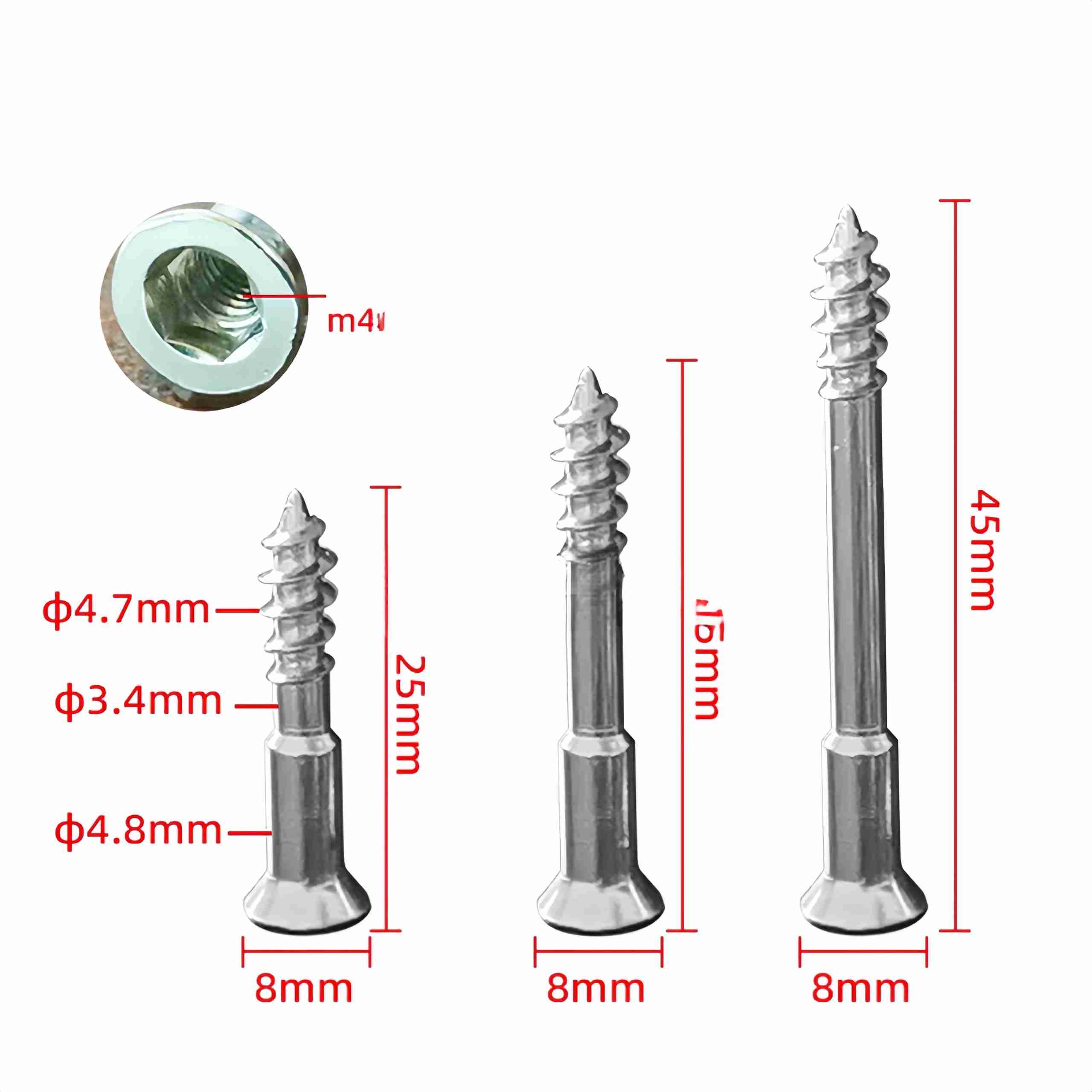
Acrylic Nuts — First & Second Generation
Acrylic nuts are the decorative cap that finishes the screw on a crystal-face luminous sign. First Generation Acrylic Nuts are the classic dome-shaped cap with a simple press fit. Second Generation Acrylic Nuts feature a locking thread that prevents the cap from vibrating loose on outdoor signs — the preferred choice for any sign that will face wind load.
Use when: Finishing the exposed screw heads on acrylic-face channel letters. Match the nut color to the letter face for a clean look.
PVC Embedded Metal Nut
PVC foam board letters need a metal thread to accept screws without stripping out. PVC Embedded Metal Nuts are heat-pressed or adhesive-bonded into the PVC foam body, providing a permanent metal thread in a plastic substrate. Essential for any PVC foam letter that will be assembled with screws.
Blind Rivet Nut
Blind Rivet Nuts (also called rivet nuts or nutserts) are installed from one side into pre-drilled holes in sheet metal or aluminum profiles. Once expanded, they provide a strong threaded hole without access to the back face. Indispensable for installing mounting hardware on sealed aluminum letter bodies and extruded profiles.
Hand Tightening Nut & Hexagonal Small Nut
The Hand Tightening Nut allows tool-free removal — useful for sign panels that need periodic access for LED maintenance. The Hexagonal Small Nut is the standard locking element for threaded rod assemblies (like support pole installations).
3. Clips for Sign Bottom Plates
The bottom plate of a luminous character is a thin aluminum panel that closes the back of the letter body. Without proper clips, the bottom plate can sag or bow outward over time — especially on larger letters where the plate spans a wide unsupported gap. Bottom plate clips prevent this by locking the plate edge to the letter wall.
Plastic Quick Clip & Metal Quick Clip
Plastic Quick Clips are the fast-fit solution for bottom plate installation. They snap onto the letter wall and grip the plate edge without tools — dramatically speeding up production on high-volume letter runs. Metal Quick Clips (pull-the-ear type) offer stronger grip for larger letters or panels that face higher wind load.
Choose plastic for: Indoor signs, smaller letters (under 15cm height), high-volume production
Choose metal for: Outdoor installations, large letters (15cm+), windy locations
New Plug-in Hanging Ear
The New Plug-in Hanging Ear is a clip that mounts on the bottom plate and accepts a hanging wire or cable. It’s the clean solution for suspended sign installations where traditional through-bolt hanging isn’t practical.

4. Hooks for Sign Letter Hanging
Many luminous signs are hung rather than screwed directly to a wall — either for ease of installation, for aesthetic reasons (no visible fasteners on the face), or because the mounting surface doesn’t accept screws. A range of hook styles covers every hanging scenario.
Z Shape Hook & Mountain Shape Hook
The Z Shape Hook is the most common hanging fastener for luminous characters. One arm attaches to the letter body; the other hooks over a mounting rail or wire. The Mountain Shape Hook (M-shape) is a variant that provides a wider bearing surface — better for heavier letters where load needs to be distributed across a larger contact area.
Hidden Hanging & Gourd Hanging
For premium sign installations where no fasteners should be visible from the front, Hidden Hanging hardware mounts behind the letter body and clips to a concealed wall bracket. Gourd Hanging (named for its distinctive gourd shape) provides a keyhole-style mount that allows the letter to be dropped onto a wall-mounted pin — fast to install and completely invisible from the front.
For a complete walkthrough of all hanging and mounting methods, see our detailed LED Luminous Sign Installation Guide.
2-Hole & 3-Hole Mounting Ears
2-Hole Mounting Ears and 3-Hole Mounting Ears are flat brackets that weld or rivet to the back of a letter body, providing multiple fixing points for wall attachment. The additional holes allow for leveling adjustment during installation — a small detail that makes a big difference when hanging a multi-letter sign in a straight line.
5. Rods, Poles & Standoffs
Standoff systems hold signs away from walls to create a floating effect or allow cable management behind the sign. The right rod system depends on sign weight, projection distance, and whether the installation is temporary or permanent.
Coarse Thread Rod & Plastic Buckle Rod
Coarse Thread Rods are threaded standoff studs that project from the wall and accept the letter body directly — no separate bracket needed. Combined with Plastic Buckle Rods, they create a clean wall-projection system that’s faster to install than traditional bracket systems. Particularly suited to acrylic dimensional lettering where a visible standoff is part of the design.
Plastic Pole
The Plastic Pole is a lightweight spacer used inside letter bodies to maintain consistent depth and prevent the letter walls from bowing inward under clamping load. Standard in high-volume production environments where consistency across large letter runs is important.
6. Welding Lugs & Mounting Ears
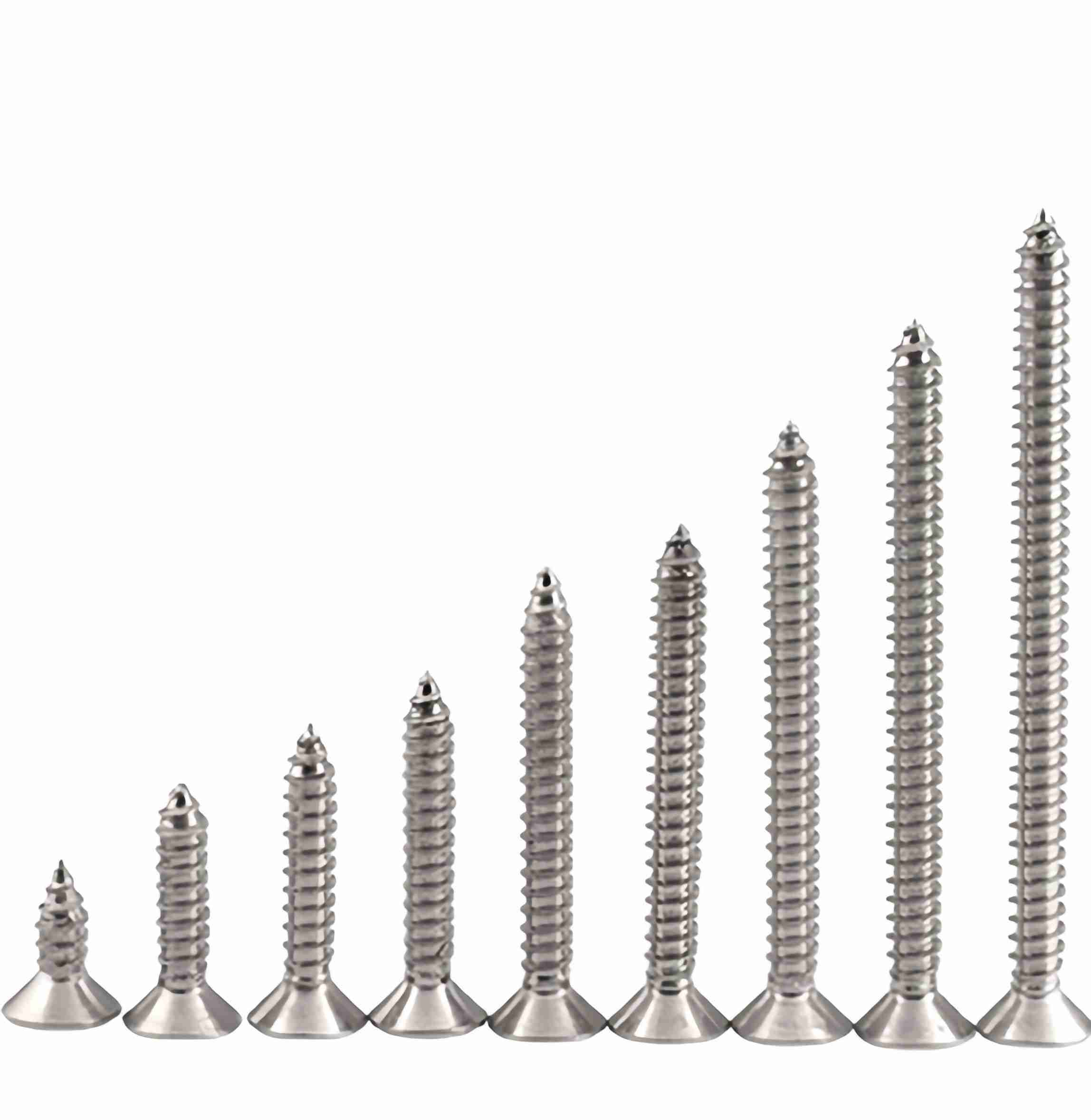
Welding lugs are small metal tabs that are spot-welded to the back of aluminum letter bodies to provide a fixing point. They’re the traditional approach for steel and aluminum sign fabrication and remain the strongest attachment method when welding equipment is available in the shop.
Round Welding Lugs are circular tabs welded behind a letter, with a central hole for a mounting screw. Semi-Circular Welding Lugs provide a wider weld footprint on the letter body — better for thin-wall aluminum where a full round lug would span too close to the edge.
Fastener Selection Quick-Reference
| Application | Recommended Fastener |
|---|---|
| Fixing acrylic face to letter body | Special Screw + Acrylic Nut (2nd Gen) |
| Halo backlit letter (face + wall gap) | Backlight Dual Purpose Screw |
| Mini letters under 5cm | SS304 Mini Word Screw |
| 3D dimensional acrylic letters | Special Screws for 3D Characters |
| PVC foam board assembly | PVC Embedded Metal Nut + standard screw |
| Sheet metal threaded insert (blind side) | Blind Rivet Nut + Rivet Nut Tool |
| Bottom plate (fast production) | Plastic Quick Clip |
| Bottom plate (heavy/outdoor) | Metal Quick Clip |
| Standard letter hanging | Z Shape Hook or Mountain Shape Hook |
| Premium hidden installation | Hidden Hanging or Gourd Hanging |
| Standoff dimensional letters | Coarse Thread Rod + Plastic Buckle Rod |
| Welded attachment (steel/aluminum body) | Round Welding Lug or Semi-Circular Welding Lug |
Outdoor vs. Indoor: What Changes with Fastener Selection
Outdoor sign fasteners face UV radiation, rain, salt air, and temperature swings exceeding 50°C between seasons (range from approximately −15°C winter low to +40°C summer peak in continental climates, per NOAA U.S. Climate Normals 1991–2020). Key considerations:
- Material: Use stainless steel (SS304 or better) or hot-dip galvanized fasteners for outdoor installations. Standard zinc-plated screws will rust within 3–6 months in coastal environments (per ISO 9223 C5 corrosivity classification: typical zinc plating provides <5 µm/year protection, while SS304 exhibits negligible corrosion rate in C3 and moderate C5 environments).
- Thread locking: Use Second Generation Acrylic Nuts (locking thread) rather than first-generation press-fit caps on outdoor signs. Thermal cycling causes press-fit caps to loosen.
- Load rating: Size up fastener gauge for outdoor signs in exposed locations — wind load on a 1 m² sign at 60 km/h is approximately 180 N (calculated per EN 1991-1-4 wind load standard: basic velocity pressure qb = 0.613 × v² Pa). A single M5 grade 304 stainless steel screw in 1.0 mm aluminum has a shear capacity of approximately 950 N (per ASTM F593-24), well above this load — but the mounting surface (wall plugs, anchors) is often the limiting factor.
- Corrosion isolation: Where aluminum letters mount to a steel structure, use a plastic or nylon washer between dissimilar metals to prevent galvanic corrosion.
Common Fastener Mistakes in Sign Making
Using standard hardware-store screws: They’re not designed for the thin walls of aluminum sign bodies. Purpose-made sign screws have the right thread pitch, length range, and head style. Standard screws often strip or protrude in ways that damage the acrylic face.
Over-tightening screws in acrylic: Acrylic is notch-sensitive. Over-torqued screw holes create stress concentrations that crack the face — sometimes immediately, sometimes after UV exposure weeks later. Tighten until snug, then a quarter turn more. No impact drivers.
Using plain zinc screws outdoors: They’ll rust and streak the face within one wet season. Use SS304 or galvanized fasteners for any outdoor application.
Skipping bottom plate clips on large letters: On letters taller than 15cm, the bottom plate will bow and sag without clips. This creates visible deformation in the sign and allows water ingress. Add Metal Quick Clips at 10–15cm intervals for letters in this size range.
Mixing fastener systems: Combining hanging hooks with screw mounting creates uneven load distribution. Decide on a single mounting system per sign and stick to it.
Pairing Fasteners with the Right Adhesives
For some sign applications, fasteners and adhesives work together. Screws provide immediate mechanical strength while adhesive cures; adhesive then takes the long-term load and prevents screw loosening. For the right adhesive to pair with these fasteners, see our Sign Maker’s Guide to Adhesives.
Frequently Asked Questions About Sign Fasteners
What screws should I use for outdoor channel letters?
Use SS304 stainless steel screws with second-generation acrylic locking nuts for outdoor channel letters. The stainless steel resists corrosion in rain, salt air, and UV exposure, while the locking-thread acrylic nuts prevent caps from vibrating loose during thermal cycling. Avoid standard zinc-plated screws — they will rust and streak the acrylic face within 3–6 months in outdoor conditions.
How do I prevent acrylic letter faces from cracking when installing screws?
Acrylic is notch-sensitive, meaning cracks propagate easily from screw holes under stress. Tighten screws until snug, then add no more than a quarter turn — never use impact drivers on acrylic faces. Pre-drill holes slightly oversized (0.2–0.3 mm clearance) to allow for thermal expansion. Over-torqued screws create stress concentrations that can crack the face immediately or after weeks of UV exposure.
What is the difference between first and second generation acrylic nuts?
First-generation acrylic nuts use a simple press-fit dome cap that covers the exposed screw head. Second-generation acrylic nuts add a locking thread mechanism that prevents the cap from vibrating loose on outdoor signs exposed to wind load and thermal cycling. For any sign that will face weather or wind, second-generation locking nuts are the preferred choice — they eliminate callbacks for loose decorative caps.
Can I use regular hardware-store screws for sign making?
No. Hardware-store screws are not designed for the thin aluminum walls (typically 0.6–1.2 mm) of channel letter bodies. They have the wrong thread pitch, head style, and length range for sign work. Purpose-made sign screws are sized specifically for acrylic-to-aluminum and aluminum-to-aluminum assembly. Standard screws often strip the thin aluminum or protrude through and damage the acrylic face.
How do I hang a sign without visible fasteners from the front?
Use Hidden Hanging or Gourd Hanging hardware for completely invisible front mounting. Hidden Hanging mounts a concealed bracket behind the letter body that clips onto a wall bracket. Gourd Hanging uses a keyhole-shaped mount — the letter drops onto a wall-mounted pin and is held flush against the wall. Both methods leave the front face clean with zero visible fasteners, which is essential for premium retail and lobby signage where aesthetics are the primary concern.
What fasteners work best for PVC foam signs?
PVC foam board cannot accept screws directly — the foam substrate strips under thread load. Use PVC Embedded Metal Nuts, which are heat-pressed or adhesive-bonded into the foam body to create a permanent metal thread. Pair these with standard screws matched to the nut thread size. For lightweight PVC signs under 3 kg that will not face wind load, adhesive-only assembly with a structural acrylic adhesive may be a viable alternative.
How often should I space bottom plate clips on large letters?
Space metal quick clips every 10–15 cm along the bottom plate edge for letters taller than 15 cm. For letters between 15 cm and 30 cm, 10 cm spacing provides the best sag prevention. For extra-large letters above 30 cm, consider adding a center support post in addition to perimeter clips. Plastic quick clips are suitable for indoor letters under 15 cm only — they lack the grip strength required for outdoor wind loads.
Limitations: When These Fastener Recommendations Do Not Apply
The fastener recommendations in this guide assume standard aluminum channel letter construction with wall thicknesses of 0.6–1.2 mm and individual letter assembly weights under 15 kg. The following conditions fall outside the scope of this guide:
1. Structural steel signage. Signs fabricated from structural steel sections (e.g., pylon signs, monument signs, large roof-mounted installations) require fasteners specified by a structural engineer per local building codes. The self-tapping screws and small-diameter threaded fasteners in this guide are not suitable for structural steel connections.
2. Marine and extreme coastal environments. In C5-M (very high marine corrosivity) zones per ISO 9223:2012 — such as offshore platforms, seaside promenades, or installations within 500 m of breaking surf — upgrade from SS304 to SS316 (A4) stainless steel. SS304 can still pit in continuous salt-spray exposure despite being rated for most coastal applications.
3. Signs requiring fire-rated or seismic-rated hardware. Installations governed by fire codes (e.g., egress path signage, plenum spaces) or seismic codes (e.g., Seismic Design Category D and above per ASCE 7) may require certified hardware not covered by the general-purpose fasteners in this guide. Consult local authority requirements before specifying fasteners for code-governed installations.
4. Letters exceeding 15 kg individual weight. The hanging hooks, clips, and threaded rods described here are sized for letter assemblies up to approximately 15 kg. For heavier dimensional letters (thick acrylic, solid metal, or large-format signs above 1.5 m² face area), consult manufacturer load tables or have a qualified installer specify the mounting system.
Order Wholesale from 8shopsigns.com
All fasteners in this guide are stocked for wholesale supply. We sell to sign shops, advertising material distributors, and fabrication houses worldwide. Browse the Screw / Bolt / Lug category for the full range, or contact us for bulk pricing, sample kits, and custom stocking programs.
References & Sources
- ASTM F593-24 — Standard Specification for Stainless Steel Bolts, Hex Cap Screws, and Studs. ASTM International, 2024. Referenced for SS304 shear strength values cited in Section 5 (Outdoor vs. Indoor).
- EN 1991-1-4:2005+A1:2010 — Eurocode 1: Actions on Structures — Wind Actions. European Committee for Standardization (CEN), 2010. Referenced for wind load calculation (basic velocity pressure formula qb = 0.613 × v² Pa) cited in Section 5.
- ISO 9223:2012 — Corrosion of Metals and Alloys — Corrosivity of Atmospheres — Classification, Determination and Estimation. International Organization for Standardization, 2012. Referenced for environmental corrosivity classifications (C3, C5, C5-M) cited in Limitations and Section 5.
- NOAA NCEI — U.S. Climate Normals 1991–2020. National Centers for Environmental Information. Referenced for continental temperature swing data cited in Section 5.
Limitations
This guide applies to general sign fabrication using acrylic (PMMA), aluminum (1.0-3.0 mm), PVC foam board (3-19 mm), and stainless steel (0.5-1.5 mm). Not applicable to:
- Concrete/brick/stone mounting without expansion anchors
- Marine/saltwater environments (requires ISO 9227 salt-spray certification, 500+ hours for A2, 1,000+ hours for A4/316 grade)
- Overhead suspended installations exceeding 50 kg
- Seismic zones requiring dynamic loading calculations
Last reviewed: June 23, 2026. Content updated with quantified data, FAQ, limitations, and authoritative references.