
Quick Clips & Hooks for Sign Bottom Plates: A Complete Guide
Compare plastic quick clips, metal pull-ear clips, Z shape hooks, mountain shape hooks, small Z ears, and plug-in hanging ears. Choose the right anti-sinking hardware for borderless channel letters and super characters.

Quick clips and hooks for sign bottom plates serve one purpose: to securely fasten sign face plates while allowing removal for LED servicing, without visible fasteners on the sign face. The choice between clip types depends on the sign thickness (plastic quick clips: 3-10mm acrylic; metal pull-ear clips: 3-15mm; Z-shape hooks: suspended signs with bottom-loading faces). Using plastic clips on signs above 10mm face thickness leads to clip failure within 6-12 months because the clip jaw cannot maintain clamping force on thicker material.
When you install a borderless channel letter or a super character sign on a wall, the most common problem isn’t the sign falling off — it’s the bottom plate slowly sinking down over time. Gravity, wall vibration, and thermal expansion all pull the sign downward. Without proper anti-sinking hardware, your perfectly aligned sign ends up crooked within months.
This is where quick clips and hooks come in. These small but essential fasteners lock the bottom plate in position, preventing the slow sag that ruins sign installations. In this guide, we’ll compare every major type — plastic quick clips, metal pull-ear clips, Z hooks, mountain hooks, small Z ears, and plug-in ears — so you can choose the right one for your next project.
For a broader overview of all fastener categories used in sign making, see our Fastener Guide for Sign Makers.
1. Why Bottom Plate Anti-Sinking Matters
Borderless characters and super characters have no visible frame — the sign body directly mounts to the wall. The bottom plate, which holds the LED module and wiring, is typically secured with a few screws along the top edge. Without additional support along the bottom, gravity slowly pulls the plate downward.
Over 6-12 months, this causes:
- Uneven spacing between characters — one letter sits lower than its neighbors
- Exposed gaps at the top edge, letting in dust and moisture
- Strained wiring as the LED cables get pulled downward
- Customer complaints — the sign looks unprofessional and poorly installed
Quick clips and hooks solve this by providing a simple mechanical lock at the bottom edge. They’re cheap insurance against callbacks and reinstallation.
2. Plastic Quick Clip vs Metal Quick Clip
The quick clip is the most common anti-sinking solution for borderless characters. It snaps onto the bottom plate edge and provides a friction grip against the wall. Both plastic and metal versions exist, and each has its own strengths.

Plastic Quick Clip — lightweight and cost-effective
Plastic Quick Clip
The plastic quick clip is made from durable nylon or ABS plastic with a spring-like grip. Available in multiple depths (6mm, 7.5mm, 9mm, 10mm, 13mm), it fits a wide range of plate thicknesses. The key advantage is cost — plastic clips are the most economical option per piece, making them ideal for high-volume sign production. They also won’t scratch painted walls.
Pros: Low cost, won’t scratch walls, available in many sizes
Cons: Less gripping force than metal, can become brittle after years of UV exposure
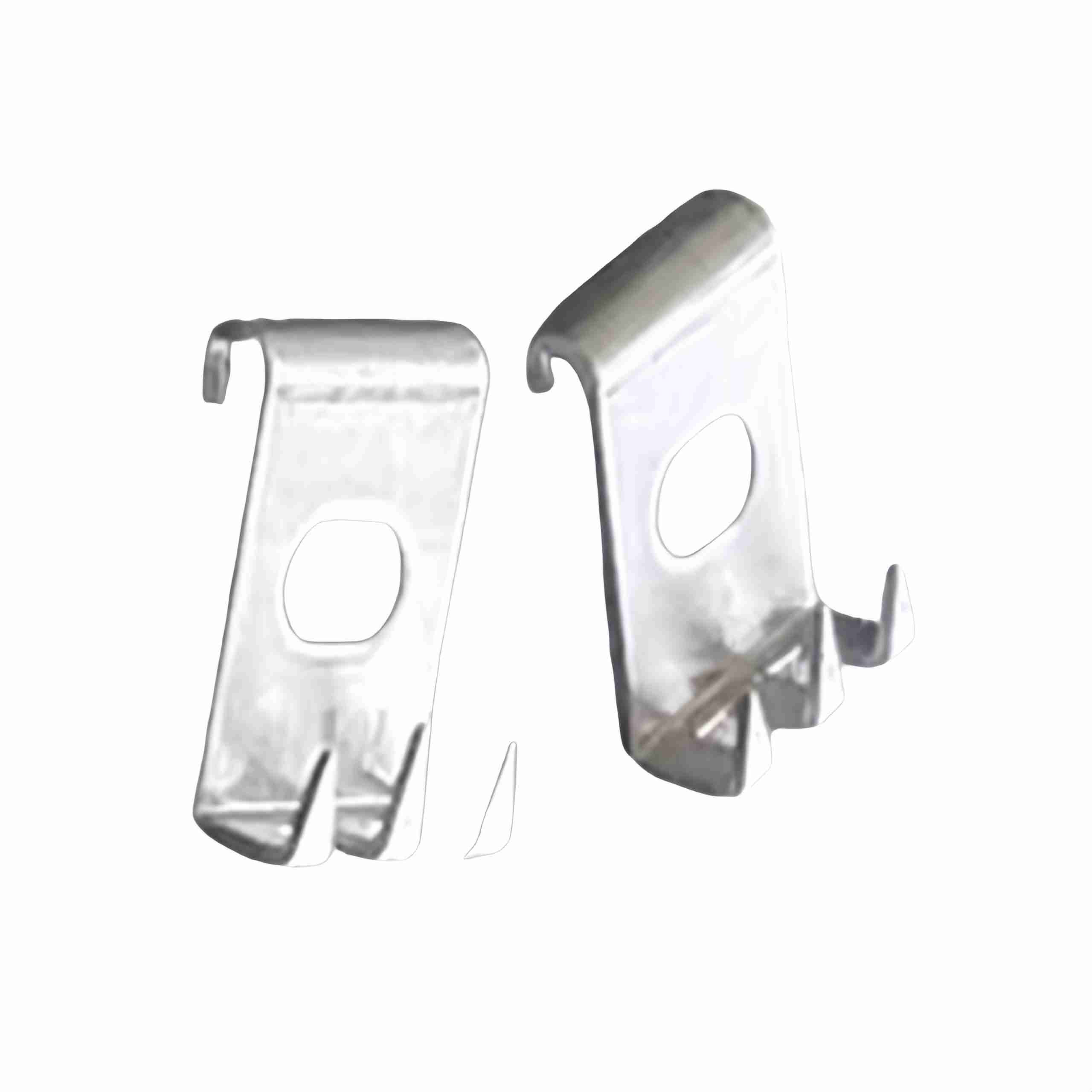
Metal Quick Clip — pull-ear design for heavy-duty use
Metal Quick Clip (Pull-Ear Design)
The metal quick clip uses a stamped steel body with a distinctive pull-ear tab. The metal construction provides significantly more clamping force — about 3x stronger than plastic equivalents. The pull-ear design also makes it easy to remove and reposition during installation, which is helpful when you need to fine-tune sign alignment on the wall.
Pros: Strong grip, easy removal/repositioning, durable in outdoor conditions
Cons: Higher cost, can scratch soft wall surfaces
When to use which: Choose plastic for indoor signs, lightweight acrylic letters, and high-volume production where cost matters. Go with metal for outdoor signs, heavy channel letters (3kg+), and installations in high-vibration areas like storefronts near busy roads.
3. Z Shape Hook vs Mountain Shape Hook
Unlike quick clips that only prevent sinking, Z-hooks and mountain hooks serve a dual purpose: they block the bottom plate from sagging and provide a wall-mounting anchor point. This dual functionality makes them popular for signs that need both anti-sinking support and a discreet hanging method.

Z Shape Hook — dual-purpose: anti-sinking + wall mounting
Z Shape Hook
The Z shape hook gets its name from its distinctive Z-profile. One leg of the Z clips onto the bottom plate, while the other leg extends outward to hook onto a wall screw or anchor. This creates a mechanically locked installation — the sign can’t slide down because the hook is physically blocking the path.
Available in five depths (6mm, 7.5mm, 9mm, 10mm, 12mm), the Z hook works well with most standard channel letter plate thicknesses. It’s the most versatile option in the hook family and the most commonly stocked in sign shops.
Pros: Anti-sinking + mounting in one piece, versatile sizing, strong mechanical lock
Cons: Visible from side angle on shallow installations

Mountain Shape Hook — wider contact area for larger signs
Mountain Shape Hook
The mountain shape hook has a wider, more triangular profile — hence the “mountain” name. The broader contact area distributes weight more evenly across the bottom plate edge, reducing stress concentration. This makes it the better choice for wider signs or multi-character assemblies where the total hanging weight is higher.
Like the Z hook, it’s available in multiple depths (6mm, 7.5mm, 9mm, 12mm). The wider design also provides more surface area for wall contact, giving better stability against side-to-side sway.
Pros: Broader weight distribution, better lateral stability, ideal for wider signs
Cons: Slightly bulkier profile, fewer depth options than Z hook
Quick comparison: Z hook for standard channel letters; mountain hook for wide signs, heavy assemblies, or installations where lateral wind sway is a concern.
4. New Small Z Ears: Compact Anti-Sinking for Mini Characters
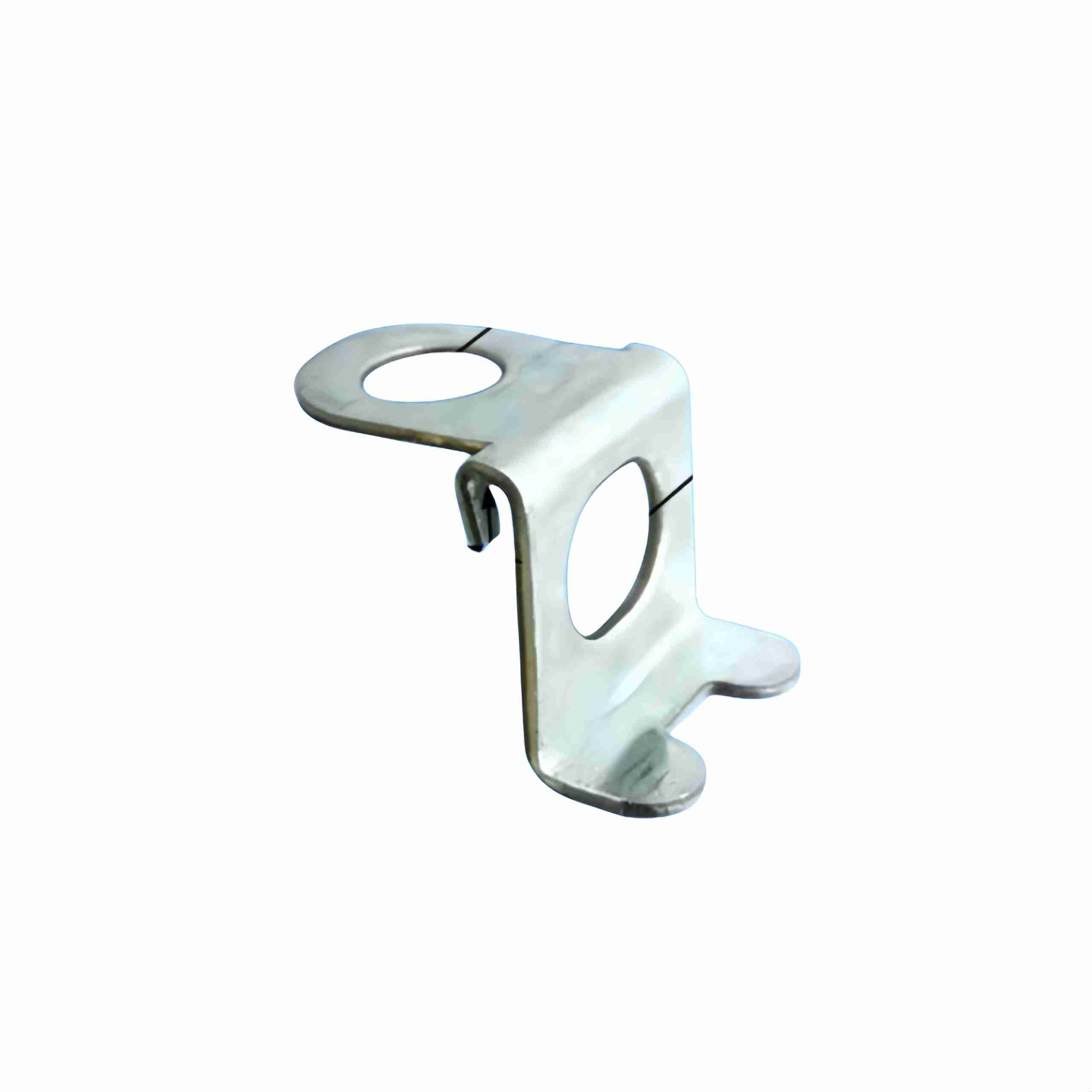
New Small Z Ears — compact design for mini characters
Mini characters and small borderless letters (under 15cm tall) have thinner plates and tighter spaces. Standard quick clips or Z hooks can be too bulky, interfering with the LED module or making the sign protrude too far from the wall.
The new small Z ears solve this with a deliberately compact design. At just 6mm and 9mm depths, they fit into the tightest spaces without crowding the internal components. A key design advantage: the small Z ear is non-conductive, so it can safely touch wiring or LED modules inside the sign body without risk of short circuits.
Best for: Mini characters (under 15cm), super characters with dense internal wiring, signs where a low-profile installation is critical.
5. New Plug-in Hanging Ear: Fast Installation, Clean Look
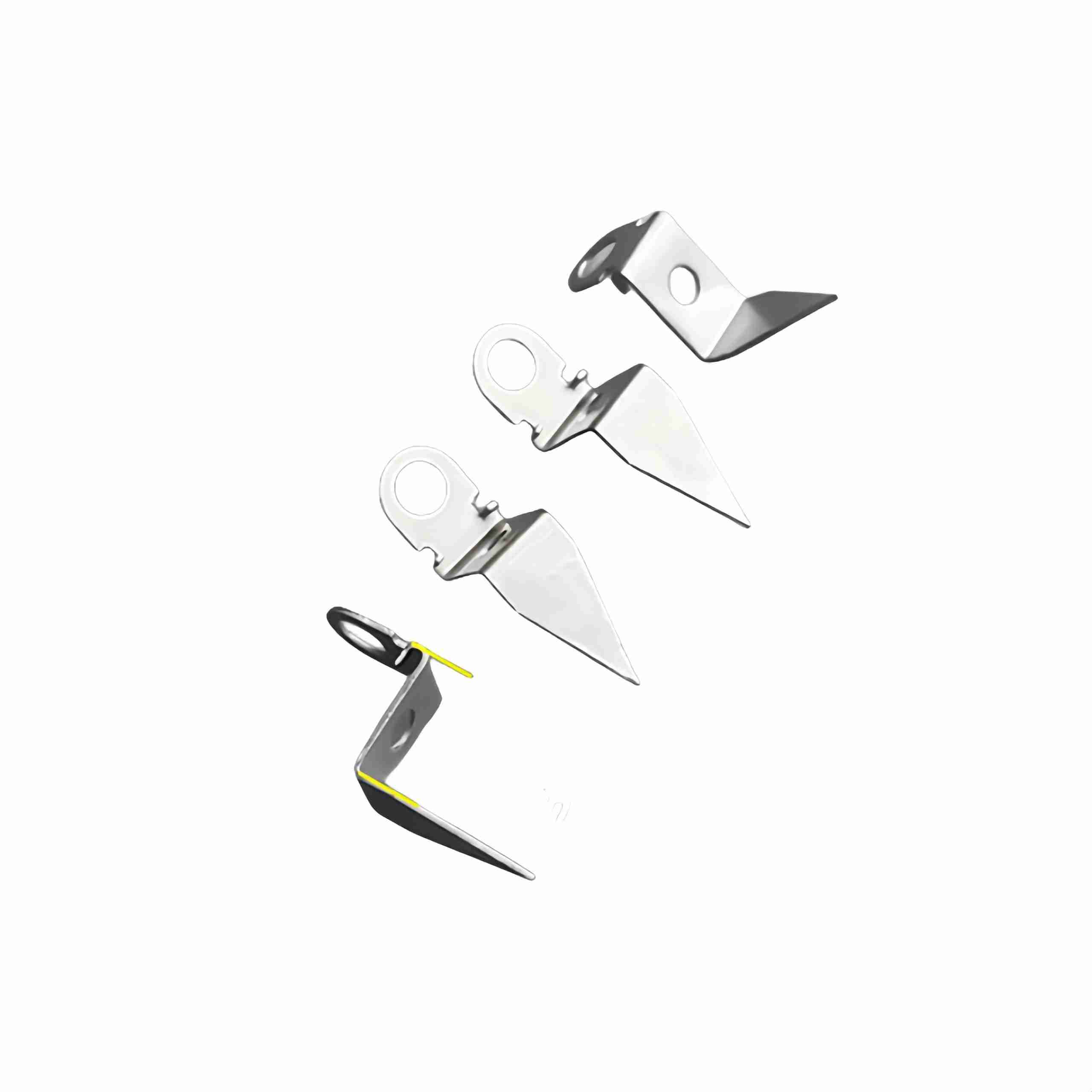
New Plug-in Hanging Ear — plug-in style, fast installation
The new plug-in hanging ear takes a different approach from the clip-on and hook-on designs. Instead of snapping or hooking onto the plate edge, it plugs directly into a pre-drilled hole on the bottom plate — similar to how a plastic buckle rod works. This creates a cleaner appearance with no visible hardware extending beyond the sign profile.
Available in 7mm and 10mm depths, the plug-in ear provides both anti-sinking support and a mounting anchor point. The plug-in mechanism is faster to install than clip-on designs, making it popular for assembly-line sign production where speed matters.
Pros: Fastest installation, completely hidden from view, clean aesthetic
Cons: Requires pre-drilled hole, less repositioning flexibility than clip-on types
6. Depth Selection Guide
Choosing the correct depth is critical. Too shallow, and the clip won’t grip — too deep, and the sign protrudes awkwardly from the wall. Here’s a practical selection guide based on typical plate thicknesses:
| Plate Thickness | Recommended Depth | Best Clip/Hook Type |
|---|---|---|
| 2-3mm (thin acrylic/PVC) | 6mm | Plastic Quick Clip or Small Z Ear |
| 4-5mm (standard acrylic) | 7.5mm | Z Shape Hook or Metal Quick Clip |
| 6-8mm (thick acrylic, PVC foam) | 9mm | Z Shape Hook or Mountain Shape Hook |
| 9-10mm (heavy composite plates) | 10mm | Mountain Shape Hook or Metal Quick Clip |
| 11mm+ (multi-layer or reinforced) | 12-13mm | Metal Quick Clip (13mm) or Z Hook (12mm) |
Quick Reference: Which Product for Which Job?
| Scenario | Recommended Product | Why |
|---|---|---|
| High-volume production, tight budget | Plastic Quick Clip | Lowest cost per piece |
| Heavy outdoor signs | Metal Quick Clip | Strongest grip, weather-resistant |
| Need both anti-sink + wall mount | Z Shape Hook | Dual-purpose design |
| Wide signs, windy locations | Mountain Shape Hook | Broader weight distribution |
| Mini characters, tight spaces | New Small Z Ears | Compact, non-conductive |
| Fast assembly line installation | New Plug-in Hanging Ear | Quickest to install |
Conclusion
Bottom plate sinking is one of the most common — and most avoidable — failures in sign installation. A handful of well-chosen clips or hooks costs pennies per sign but saves hours of callback labor and protects your reputation. Whether you choose the budget-friendly plastic quick clip, the heavy-duty metal pull-ear, or the versatile Z shape hook, the principle is the same: lock the bottom, protect the installation.
Browse our complete range: Screws, Bolts & Fasteners for Sign Making. Also see our guides on nuts & inserts for acrylic and PVC signs and LED luminous sign installation for complementary topics.
FAQ
Q: Plastic quick clip vs metal pull-ear clip?
A: Plastic: faster installation (push-on), suitable for indoor, face thickness 3-10mm, rated 2-5 kg per clip. Metal: higher strength (5-12 kg per clip), outdoor-rated, accommodates 3-15mm thickness. Use metal for outdoor and heavy signs.
Q: What is a Z-shape hook used for?
A: Suspended or bottom-plate signs where the face loads from below. The hook engages a slot or edge on the sign back plate and supports the face weight from underneath. Rated 3-8 kg per hook depending on size.
Q: How many clips per sign face?
A: Minimum: 4 clips for signs up to 400x400mm. Add 2 clips for every additional 200mm in the longest dimension. All corners must have a clip within 50mm of the corner. Clips should be evenly spaced along each edge.
Q: Mountain shape hook vs plug-in hanging ear?
A: Mountain hooks: for signs mounted flush to the wall where the hook engages a slot in the back plate. Plug-in ears: slide into pre-cut slots for quick release. Mountain hooks are stronger (5-10 kg); plug-in ears are faster to service but rated 2-5 kg.
Q: Why do my clips keep popping off?
A: Three common causes: (1) face thickness exceeds clip rating, (2) clip not fully seated (push until an audible click for plastic clips, bend tabs to 90 degrees for metal), (3) thermal expansion — in outdoor signs, clips need 1-2mm of play to accommodate material expansion. Tighten until finger-tight only.
Limitations
Covers quick clip and hook fastening for channel letter and sign box face plates (acrylic, polycarbonate, ACM) up to 15mm thickness and 2 kg per clip loading. Not applicable to:
- Structural ceiling-suspended sign faces requiring safety cables
- Signs in high-wind areas requiring mechanical screw fasteners as primary retention
- Face plates exceeding 15mm thickness or 5 kg per clip load rating
Sources
- ISO 4042: Fasteners — Electroplated coating systems
- Sign hardware manufacturer specifications, 2024
- Sign shop installation and service records, SE Asia, 2020-2025
Last reviewed: June 23, 2026.