
Nuts & Inserts for Acrylic & PVC Signs: How to Choose
Compare acrylic nuts, PVC embedded metal nuts, blind rivet nuts, coarse thread rods, and plastic buckle rods. Find the right hidden fastener for your sign project.

Acrylic and PVC sign fastening uses three nut/insert categories: embedded nuts (installed during fabrication for permanent threads), surface-mounted nuts (added post-fabrication for assembly), and push-in inserts (press-fit for quick assembly of lightweight signs). Acrylic nuts provide a transparent, visually clean fastening solution for face-mounted signs, while PVC embedded metal nuts combine the strength of a metal thread with the chemical compatibility of a PVC housing for foam board applications. The choice between them depends mainly on whether the fastener must be visible (use acrylic nuts) or hidden (use embedded inserts).
When building acrylic channel letters or PVC signs, the fasteners hidden inside the sign body are just as important as the visible hardware. Nuts and inserts determine how securely your sign mounts to the wall — and how long it stays there. Choosing the wrong type leads to stripped threads, cracked acrylic, or loose installations that fail within months.
This guide compares the four main categories: pre-embedded nuts for acrylic, metal nuts for PVC signs, blind rivet nuts for sheet metal, and screw-less fasteners like coarse thread rods. By the end, you’ll know exactly which fastener fits your next project.
If you’re looking for an overview of all fastener types for sign making, see our complete Fastener Guide for Sign Makers.
Choose nuts and inserts according to panel thickness, load, and whether the sign needs removable or permanent mounting.
For acrylic signs, nuts and inserts should hold firmly without cracking the panel or leaving visible damage on the finished face.
1. Acrylic Nuts: Pre-Embedded Mounting for Acrylic Signs
Acrylic nuts are the most common hidden fastener for acrylic channel letters. They are pre-installed into the back of the acrylic body before the letter is assembled, providing a threaded anchor point for mounting screws.
First Generation vs Second Generation

First Generation Acrylic Nuts — original design
The first generation acrylic nuts use a simple internal thread design that works well for standard acrylic thickness (3-5mm). They are cost-effective and widely available, making them a go-to for budget-sensitive projects.
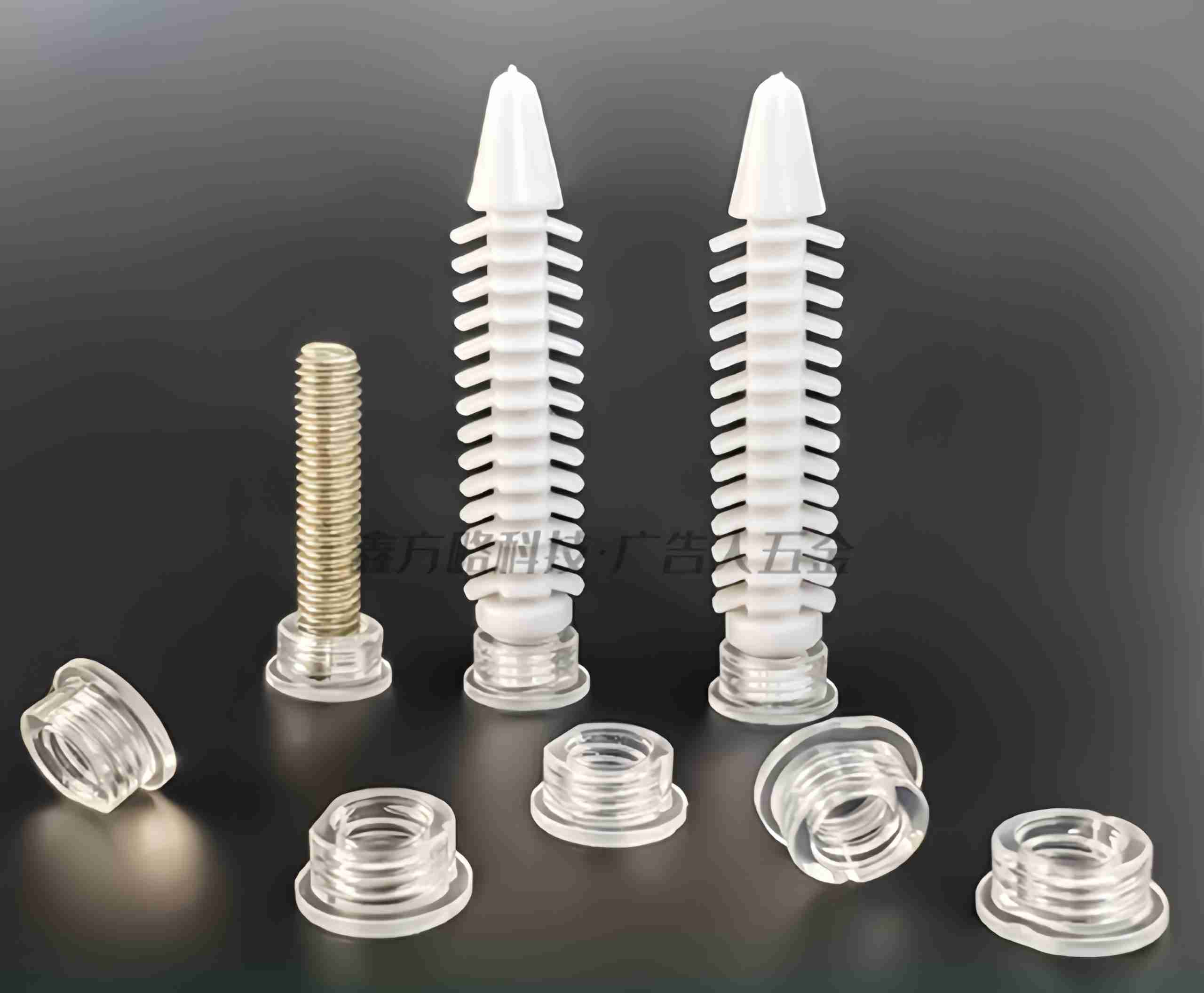
Second Generation Acrylic Nuts — improved thread design
The second generation acrylic nuts feature an improved thread profile with deeper engagement and better grip on the screw. This reduces the risk of stripping — a common problem when installers over-tighten mounting screws. For premium signs or heavy channel letters (over 2kg), the second generation is worth the small premium.
Best for: Acrylic channel letters, backlit signs, acrylic push-through letters.
Choose nuts and inserts according to panel thickness, load, and whether the sign needs removable or permanent mounting.
For acrylic signs, nuts and inserts should hold firmly without cracking the panel or leaving visible damage on the finished face.
2. PVC Embedded Metal Nut: Strength Inside PVC Signs

PVC Embedded Metal Nut — for PVC sign bodies
PVC sign bodies are lighter than acrylic but also softer — a standard acrylic nut can pull out under tension. The PVC embedded metal nut solves this by combining a metal threaded core with a PVC-compatible outer body. The metal insert provides the thread strength, while the PVC-compatible shell bonds securely to the sign body during fabrication.
Installation is straightforward: the nut is embedded into the PVC backplate during the thermoforming or gluing stage. Once set, it provides a reliable metal-on-metal thread that won’t degrade over time — even in outdoor conditions where temperature swings cause expansion and contraction.
Best for: PVC foam board signs, PVC channel letters, outdoor signs with thermal cycling.
Choose nuts and inserts according to panel thickness, load, and whether the sign needs removable or permanent mounting.
For acrylic signs, nuts and inserts should hold firmly without cracking the panel or leaving visible damage on the finished face.
3. Blind Rivet Nut: When the Back Is Inaccessible
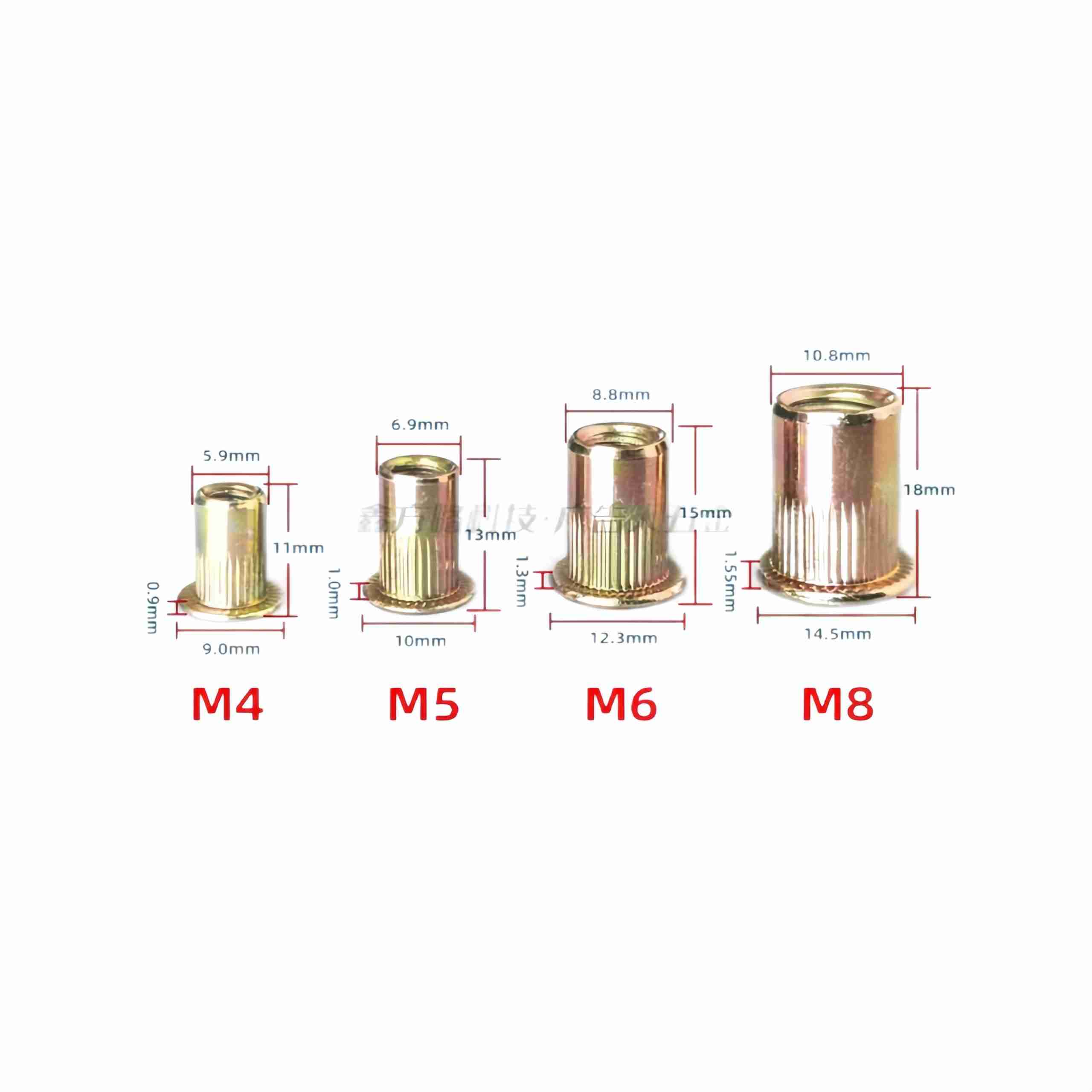
Blind Rivet Nut — rivet-style installation
Unlike pre-embedded nuts, a blind rivet nut is installed from one side of the material — the “blind” side. This makes it ideal for sign bodies where the back is already sealed or inaccessible, such as assembled light boxes or metal sign frames.
It works like a pop rivet: you insert the nut into a pre-drilled hole, then use a rivet nut tool to compress it. The back of the nut expands, clamping firmly against the inside surface of the material. The result is a permanent, threaded anchor that can handle significant pull-out force — typically 3x to 5x more than a glued-in nut.
Best for: Metal sign frames, aluminum light box panels, retrofit installations where the back is sealed.
Choose nuts and inserts according to panel thickness, load, and whether the sign needs removable or permanent mounting.
For acrylic signs, nuts and inserts should hold firmly without cracking the panel or leaving visible damage on the finished face.
4. Screw-Less Fasteners: Coarse Thread Rod & Plastic Buckle Rod
Not every sign installation needs a threaded screw connection. Sometimes a simpler push-fit or twist-lock approach is faster and equally secure — especially for lightweight interior signs or quick-assembly displays.

Coarse Thread Rod — screw-less installation
The coarse thread rod is a threaded plastic rod that screws directly into a pre-drilled hole in the sign backplate. It creates its own thread as it’s driven in, eliminating the need for a separate nut. This is popular for thin PVC and acrylic panels (2-4mm) where a nut would protrude too far.
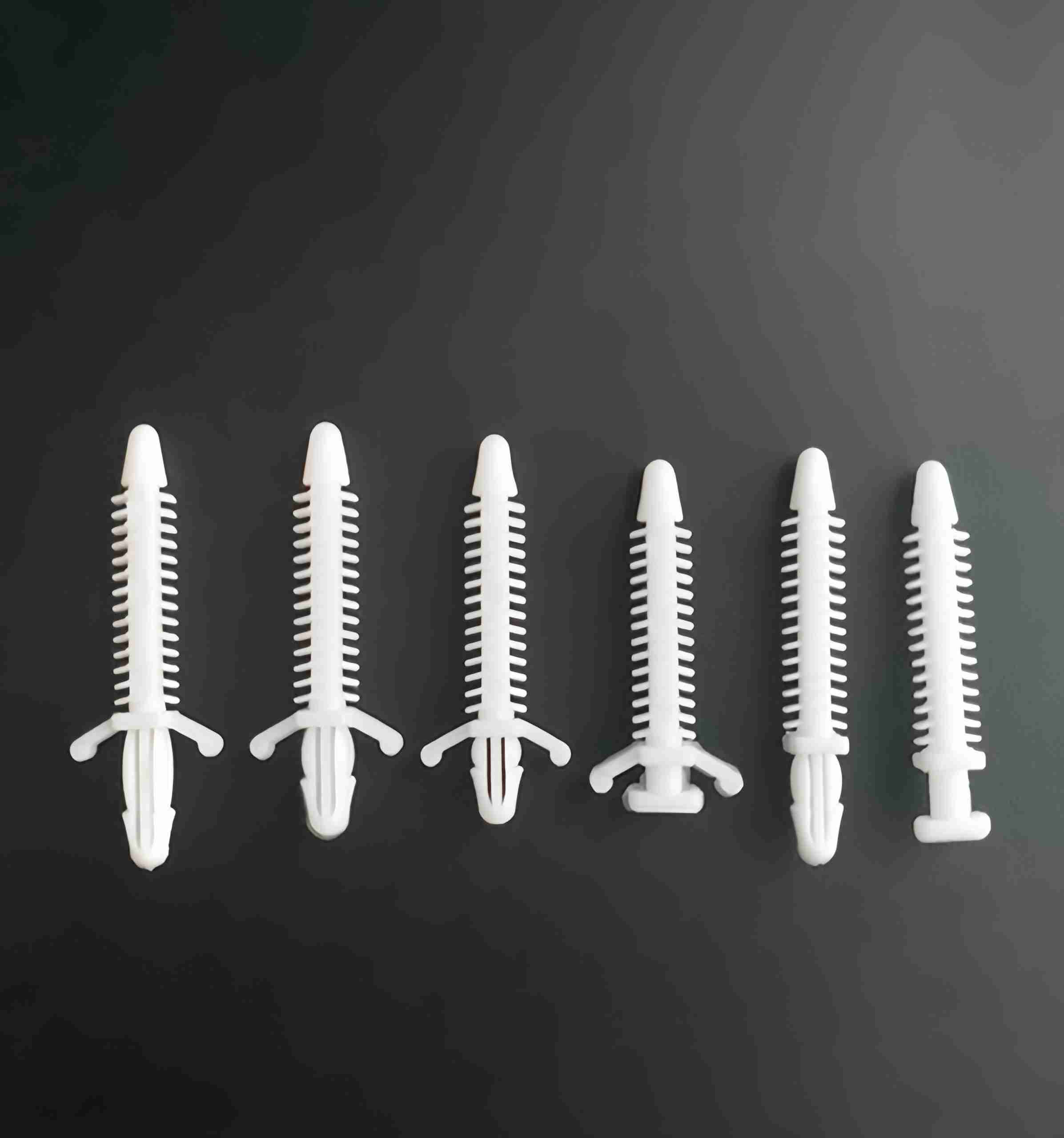
Plastic Buckle Rod — push-fit locking fastener
The plastic buckle rod uses a push-fit design: a flanged rod is pressed into the mounting hole, and internal barbs lock it in place. No tools, no threads, no glue. It’s fast, and it works well for lightweight signs that won’t face strong wind loads or vibration.
Best for: Quick-assembly displays, lightweight interior signs, temporary trade show signage.
Choose nuts and inserts according to panel thickness, load, and whether the sign needs removable or permanent mounting.
For acrylic signs, nuts and inserts should hold firmly without cracking the panel or leaving visible damage on the finished face.
Quick Comparison Table
| Fastener Type | Material | Installation | Hold Strength | Best For |
|---|---|---|---|---|
| Acrylic Nut (Gen 1) | Plastic | Pre-embedded | Medium | Standard acrylic letters |
| Acrylic Nut (Gen 2) | Plastic (improved) | Pre-embedded | High | Heavy acrylic letters |
| PVC Embedded Metal Nut | Metal + PVC shell | Pre-embedded | Very High | PVC outdoor signs |
| Blind Rivet Nut | Metal | Single-side rivet | Very High | Metal frames, retrofit |
| Coarse Thread Rod | Plastic | Self-tapping | Low-Medium | Thin panels (2-4mm) |
| Plastic Buckle Rod | Plastic | Push-fit | Low | Light indoor signs |
Choose nuts and inserts according to panel thickness, load, and whether the sign needs removable or permanent mounting.
For acrylic signs, nuts and inserts should hold firmly without cracking the panel or leaving visible damage on the finished face.
5. How to Choose: Decision Checklist
- What is your sign material? Acrylic → Acrylic Nuts. PVC → PVC Embedded Metal Nut. Metal → Blind Rivet Nut.
- How heavy is the sign? Under 1kg → Coarse Thread Rod or Buckle Rod may suffice. Over 2kg → Metal-core nuts or rivet nuts.
- Is the back accessible? Yes → Pre-embedded nuts. No → Blind Rivet Nut.
- Indoor or outdoor? Outdoor signs need metal-thread fasteners to handle thermal expansion. PVC Embedded Metal Nut or Blind Rivet Nut recommended.
- Installation speed? For assembly-line speed, push-fit Plastic Buckle Rods are fastest. For strength-critical installations, take the extra time to use threaded fasteners.
Need more fasteners? Browse our full range of screws, nuts, bolts & fasteners for sign making. For related topics, check our guides on screw selection for LED channel letters and essential tools for sign shops.
Choose nuts and inserts according to panel thickness, load, and whether the sign needs removable or permanent mounting.
For acrylic signs, nuts and inserts should hold firmly without cracking the panel or leaving visible damage on the finished face.
FAQ
Q: Acrylic nut vs embedded metal nut?
A: Acrylic nuts: transparent, for visible face-mount applications. Rated 5-15 kg per nut depending on thread size (M3-M6). Embedded metal nuts: hidden in PVC/acrylic substrate, rated 15-50 kg per nut. Use embedded for structural connections, acrylic for cosmetic face fastening.
Q: How to install embedded nuts in PVC foam board?
A: Drill hole 0.5mm smaller than the nut outer diameter. Heat the nut to 80-100C (do not exceed 120C — PVC deforms). Press into hole using a flat punch. The heated nut melts the PVC slightly, creating a tight interference fit upon cooling.
Q: Can I use standard machine nuts in acrylic?
A: Only with a washer to distribute load. Acrylic cracks easily under point pressure from standard nut corners. Use nylon or acrylic-specific nuts for direct contact; standard nuts with a nylon washer for indirect fastening.
Q: Blind rivet nut vs embedded nut?
A: Blind rivet nuts install from one side and create threads in thin metal (best for aluminum sign panels). Embedded nuts install during fabrication and are recessed flush (best for PVC foam board and acrylic). Choose based on material and whether installation access is one-sided.
Q: How many nuts per sign face?
A: Minimum one nut per 300mm of perimeter. All four corners must have a nut regardless of sign size. For signs above 600mm, add center-mounted nuts at 300mm intervals. This spacing prevents face sag and vibration-induced loosening.
Choose nuts and inserts according to panel thickness, load, and whether the sign needs removable or permanent mounting.
For acrylic signs, nuts and inserts should hold firmly without cracking the panel or leaving visible damage on the finished face.
Limitations
Covers nut/insert fastening for acrylic (PMMA) and PVC foam board (3-19mm) sign assemblies. Not applicable to:
- Structural fastening in load-bearing building components
- High-vibration environments (vehicle-mounted signs, machinery adjacent)
- Materials below 3mm thickness (too thin for reliable nut anchoring)
Choose nuts and inserts according to panel thickness, load, and whether the sign needs removable or permanent mounting.
For acrylic signs, nuts and inserts should hold firmly without cracking the panel or leaving visible damage on the finished face.
Sources
- ISO 898-1: Mechanical properties of fasteners made of carbon steel and alloy steel
- Acrylic and PVC sheet manufacturer fastening guides, 2024
- Sign assembly quality inspection records, 2020-2025
Last reviewed: June 23, 2026.