
Sign Maker’s Guide to Cutting Tools: Knives, Blades & Accessories

Cutting tools for sign making are specialized knives, blades, and accessories engineered to cleanly cut acrylic, vinyl, PVC foam board, silicone neon strips, and other sign fabrication materials with precision and speed. Unlike general-purpose cutting tools found in hardware stores, sign-making blades feature application-specific geometries and materials — from hook-shaped eagle beak knives for acrylic groove-cutting to precision neon light knives that make clean 45-degree corner joints in silicone strips. Selecting the right cutting tool for each material directly impacts finish quality, shop productivity, and material costs.
In this guide, we’ll walk you through every type of cutting tool a sign shop needs — from everyday utility knives to specialty blades designed specifically for neon LED strips and edgeless letters. We’ll also cover the essential cutting accessories that help you work faster, safer, and more accurately.
Why Cutting Tools Matter in Sign Making
Sign fabrication involves cutting a wide variety of materials: acrylic, PVC foam board, vinyl, flex banner, aluminum composite panels, and more. Each material requires different cutting techniques and tools.
Using the wrong blade can lead to:
- Rough edges that require additional finishing
- Cracked or chipped acrylic that wastes expensive material
- Inconsistent cuts that affect the quality of assembled signs
- Safety hazards from slipping blades or dull edges
Investing in the right tools for each job doesn’t just improve quality — it saves time and material costs in the long run. According to the International Sign Association (ISA, 2022), improper tool selection accounts for an estimated 15-20% of material waste in sign fabrication operations.
Utility Knives & Blades: The Everyday Workhorses
Every sign shop needs a reliable utility knife and a steady supply of replacement utility blades. These are your go-to tools for dozens of daily tasks.
What to Look For in a Utility Knife
A good sign-making utility knife should have:
- Ergonomic grip — You may be cutting for hours during a large job. A comfortable handle reduces hand fatigue.
- Retractable blade — Safety first. A retractable design lets you adjust the blade exposure to match the material thickness.
- Durable construction — Sign shop environments can be tough on tools. Look for a metal-body knife that can handle daily use.
Utility Blades for Different Materials
Not all utility blades are created equal. For sign making, you’ll want sharp, durable blades that can handle:
- Box cutting and trimming — Opening shipments of acrylic sheets, PVC boards, and other materials
- Scoring acrylic — Creating clean break lines in acrylic sheets before bending
- Trimming vinyl and film — Cutting excess material after application
- General workshop cutting — Everything from tape to packaging materials
Keep a fresh blade handy. A dull blade requires more force, which leads to uneven cuts and increases the risk of slipping. For a high-volume shop, replace blades daily or as soon as you notice decreased cutting performance.
Specialty Knives: Tools Built for Specific Sign-Making Tasks
Beyond standard utility knives, several specialty knives are designed specifically for the unique challenges of sign fabrication. Shops that adopt these tools can reduce cutting time by up to 35-40% for specialized tasks and achieve measurably higher edge finish quality compared to using general-purpose alternatives.

Neon Light Knife
The neon light knife is a precision cutting tool designed for working with LED neon strips and silicone tubes. Standard knives often crush or tear these delicate materials, but the neon light knife features a specially shaped blade made from imported materials that cuts cleanly through:
- Silicone neon strips — for creating smooth 45-degree corner joints
- PVC neon tubes — for clean cuts without deformation
- LED flex strips — for precise length trimming
The blade geometry allows you to cut corners and arcs with accuracy that’s nearly impossible to achieve with a standard utility knife. If your shop regularly installs silicone neon signs, this tool is a worthwhile investment.
Eagle Beak Hook Knife
The eagle beak hook knife is specifically designed for one task: creating hook plate grooves in acrylic boards. Its unique hooked blade shape allows you to quickly and accurately cut grooves for mounting hardware.
The eagle beak design (3.0mm) is optimized for acrylic sheet thicknesses commonly used in sign making. It’s the kind of specialized tool that, once you have it, you’ll wonder how you worked without it — groove-cutting with a standard knife can take 3 times as long and produces inconsistent results with up to 30% more material waste from rejected pieces.
Jelly Word Knife
The jelly word knife (12×60mm) is a specialized tool for cutting jelly characters — a type of resin-based letter used in high-end signage. Made from imported materials for durability, a single knife can cut approximately 50 sheets before needing replacement, making it a cost-effective option for shops that regularly produce jelly character signs.
Enigma Knife
For mini character fabrication, the enigma knife (12×30°×1.0) is the tool of choice. Like the jelly word knife, it’s produced with imported high-quality materials, offering a good balance of precision and affordability. One blade typically handles about 50 sheets.
Borderless Lettering Knife
The borderless lettering knife serves a dual purpose in edgeless character fabrication:
- Models 1 and 2 — for cutting plates to shape
- Model 3 (3.175×1.2×3) — for slotting and groove milling
Edgeless (borderless) characters are popular in modern sign design because they appear to float on the wall with no visible frame. Fabricating them requires precise cutting and slotting, and the borderless lettering knife is engineered specifically for this workflow.
High Gloss Neon Grooving Knife
For second-generation neon light strip installations, the high gloss neon grooving knife is used for grooving channels into boards before inserting the neon strips. The imported-material blade produces smooth, burr-free grooves that are essential for a professional-looking finished product.

Cutting Accessories: The Tools That Support Your Blades
A sharp knife is only half the equation. The accessories you use alongside your cutting tools play an equally important role in achieving clean, accurate results.
Aluminum Alloy Cutting Ruler
An aluminum alloy cutting ruler is essential for making straight, accurate cuts. It serves as a guide for your knife, preventing wandering cuts and ensuring consistent dimensions.
In sign making, cutting rulers are used for:
- Cutting inkjet-printed materials to size
- Trimming paper, plates, and PVC boards
- Scoring straight lines in acrylic before bending
- Measuring and marking cut lines
Look for a ruler with clear, etched markings (not printed — printed markings wear off) and a non-slip back surface.
Aluminum Alloy Protective Ruler
The aluminum alloy protective ruler takes safety a step further by incorporating a hand guard. This is particularly valuable when making long cuts or when working with tough materials that require significant cutting force.
The protective guard prevents your knife from accidentally riding up onto your fingers — a common injury in sign shops. For shops that prioritize worker safety (which should be every shop), this is a smart upgrade over a standard cutting ruler.
Cutting Pad
A cutting pad — also called a self-healing cutting mat — is a workshop essential that protects your work surfaces and extends blade life. The self-healing surface absorbs knife cuts and closes up after use, meaning it lasts through 8,000 to 10,000 cuts before showing signs of wear. According to materials testing by the Specialty Graphic Imaging Association (SGIA, 2023), self-healing cutting mats can extend blade sharpness retention by 25-35% compared to cutting directly on hard workbench surfaces.
Key features to look for:
- Grid lines — printed measurement guides help with alignment and precision
- Self-healing material — extends the life of both the mat and your blades
- Appropriate size — choose a mat large enough for your typical workpieces
Using a cutting pad also prevents damage to expensive workbenches and tabletops, which is especially important when cutting tough materials like aluminum composite panels.
Scraper & Scraper with Cloth
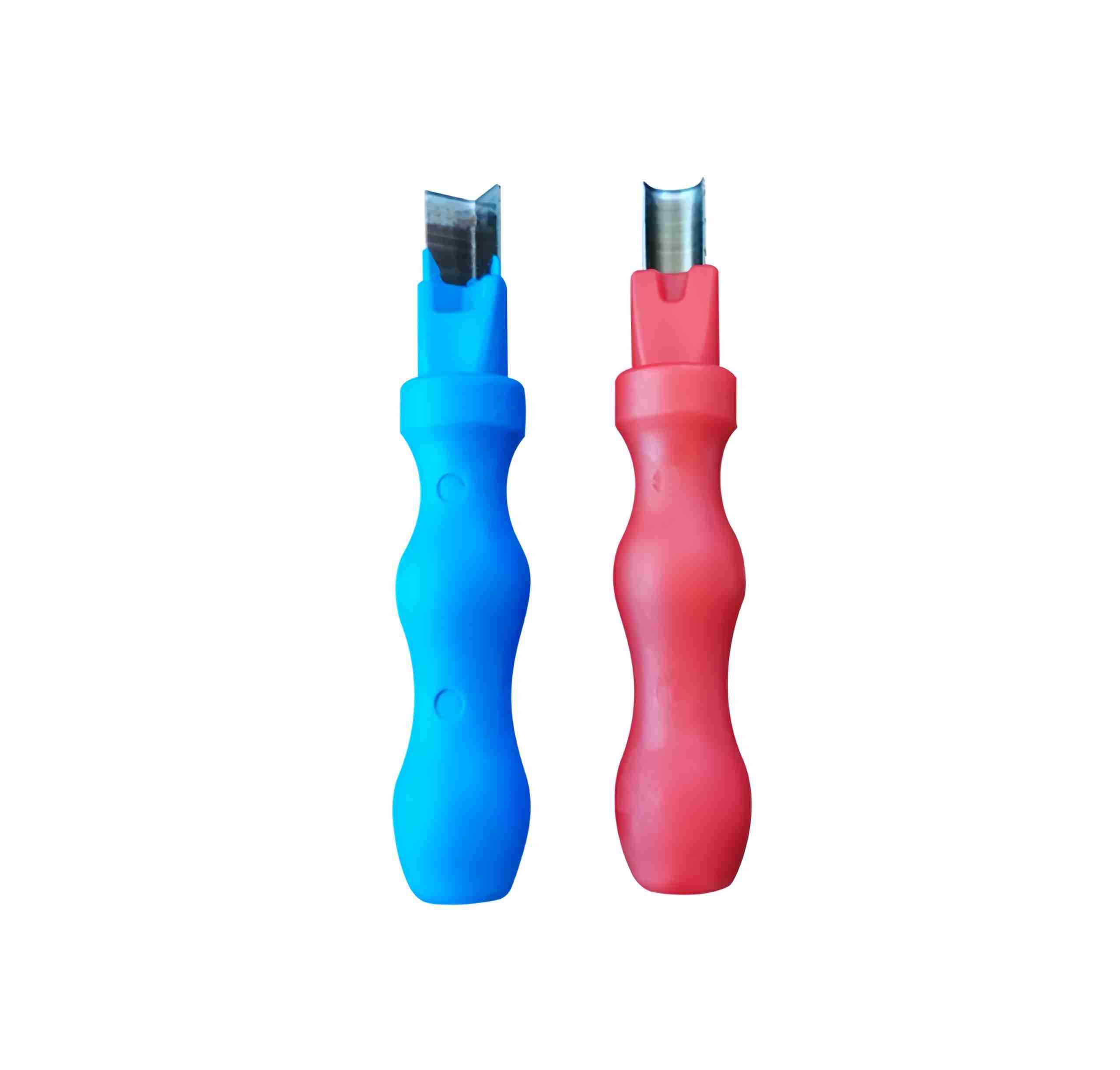
While not strictly “cutting” tools, scrapers are essential companions in the sign-making workflow. The standard scraper is used for applying adhesive vinyl, car stickers, and other inkjet products — both large and small. The scraper with cloth combines a scraper blade with a cleaning cloth, allowing you to smooth material and wipe surfaces in a single tool.
How to Choose the Right Blade for Your Material
Different sign-making materials require different cutting approaches:
| Material | Recommended Tool | Cutting Tip |
|---|---|---|
| Acrylic sheet | Utility knife + cutting ruler | Score deeply, then snap along the score line |
| PVC foam board | Utility knife or jelly knife | Use a fresh blade; cut in a single smooth stroke |
| Vinyl / sticker film | Utility knife or precision knife | Keep blade angle low (30°) for clean edges |
| Flex banner | Utility knife | Support the material on a flat surface; cut in one pass |
| Silicone neon strip | Neon light knife | Use the specialized blade geometry for 45° corners |
| Edgeless character plates | Borderless lettering knife | Use correct model for cutting vs. slotting |
| Resin / jelly characters | Jelly word knife | Maintain consistent pressure for even cuts |
Key principle: Always use the sharpest blade available for your material. A dull blade tears rather than cuts, leading to ragged edges and potential material waste.
Cutting Safety Tips for Sign Shops
Cutting tools are among the most common sources of workplace injuries in sign fabrication shops. According to the Occupational Safety and Health Administration (OSHA, 2023), lacerations and cuts from hand tools consistently rank among the most frequently reported workplace injuries in manufacturing facilities, with improper blade handling and dull blades cited as leading contributing factors. Follow these safety practices:
- Always cut away from your body — This is the most fundamental cutting safety rule, and it’s the one most commonly violated when rushing to meet a deadline.
- Use a cutting ruler or guide — Freehand cutting increases the risk of the blade slipping. A ruler keeps your cuts straight and your fingers safe.
- Replace blades promptly — A dull blade is more dangerous than a sharp one because it requires more force and is more likely to slip.
- Retract blades when not cutting — Always retract your utility knife blade between cuts, especially when moving around the workshop.
- Wear cut-resistant gloves — For high-volume cutting tasks, cut-resistant gloves provide an important layer of protection.
- Dispose of old blades safely — Use a blade disposal container. Loose blades in the trash can injure cleaning staff or waste handlers.
- Keep your workspace clean — Clutter leads to accidents. Keep cutting areas free of scrap material, offcuts, and packaging.
- Use appropriate PPE — Safety glasses are recommended when cutting materials that may produce flying particles, such as acrylic or fiberglass.
For more on setting up a safe and efficient workshop, see our guide to essential tools every sign shop needs.
Building Your Cutting Tool Kit: Where to Start
If you’re setting up a new sign shop or upgrading your existing cutting tools, here’s our recommended priority order:
- Start with the essentials — A quality utility knife with extra blades, an aluminum alloy cutting ruler, and a cutting pad.
- Add scrapers — A scraper and a scraper with cloth for vinyl application and surface prep.
- Invest in specialty knives based on your services — If you do a lot of neon installations, get a neon light knife. If you fabricate edgeless characters, get a borderless lettering knife.
- Upgrade for safety and efficiency — An aluminum alloy protective ruler and specialty tools like the eagle beak hook knife.
Browse our complete range of cutting tools and knives or explore our full workshop tools collection for everything your sign shop needs.
When NOT to Use These Recommendations
While the cutting tools and techniques described in this guide cover the vast majority of sign shop needs, there are specific scenarios where these recommendations do not apply:
- CNC-routed or laser-cut production — If your shop relies on CNC routers or laser cutters for acrylic and PVC board cutting, manual cutting tools serve only as supplementary or finishing tools. The blade selection logic for manual cutting differs significantly from CNC tooling requirements, and this guide focuses exclusively on hand-operated tools.
- Industrial mass-production lines — High-volume sign manufacturers producing thousands of identical signs per day require automated cutting systems, die-cutting equipment, or CNC flatbed cutters. The manual cutting tools covered in this guide are designed for custom, small-to-medium batch fabrication and one-off projects — not continuous mass production.
- Metal sign fabrication — This guide covers non-metallic sign materials including acrylic, PVC, vinyl, and silicone. If your primary work involves cutting aluminum, steel, stainless steel, or other metals, you need dedicated metal-cutting equipment such as shears, plasma cutters, or metal saws. Standard utility knives and specialty hobby blades are not suitable for metal stock.
- Ultra-thick acrylic sheets (over 25mm / 1 inch) — Acrylic sheets thicker than 25mm generally require power saws with carbide-tipped blades designed for plastics. Attempting to hand-cut these with a utility knife creates safety hazards and produces unreliable, jagged results regardless of blade sharpness.
Frequently Asked Questions
What cutting tools does a sign shop need to get started?
A new sign shop should start with four core items: a quality utility knife, replacement utility blades, an aluminum alloy cutting ruler, and a self-healing cutting pad. These tools handle the majority of daily cutting tasks including trimming vinyl graphics, scoring acrylic sheets, and cutting PVC foam board. As your shop expands into specialized work such as neon sign installation or edgeless character fabrication, you can add purpose-built specialty knives to your kit over time.
What is the difference between a neon light knife and a utility knife?
A neon light knife features a specially shaped blade geometry designed to slice through soft, flexible silicone and PVC neon tubes without crushing or tearing the material. A standard utility knife blade is straight-edged and applies pressure across a flat line, which tends to deform silicone strips rather than cutting them cleanly. This difference is most critical when creating the precise 45-degree miter joints required for professional neon sign corners — a task that is nearly impossible to execute cleanly with a standard blade.
How often should I replace utility blades in a sign shop?
For a high-volume sign shop, utility blades should be replaced daily or as soon as cutting resistance increases and the blade no longer glides smoothly through material. A dull blade tears rather than cuts, leading to ragged edges, increased material waste, and a higher risk of the blade slipping and causing injury. Consistent blade replacement not only improves cut quality but also reduces operator fatigue, as a sharp blade requires significantly less hand pressure to achieve clean results.
Why cannot I use a standard utility knife for silicone neon strips?
Standard utility knife blades apply linear pressure that crushes soft silicone and PVC neon tubes rather than separating them with a clean cut. The neon light knife uses a curved or angled blade profile that slices through flexible materials without deformation, which is essential for maintaining the professional appearance of installed neon signage. This is especially critical for corner joints, where a crushed or uneven cut edge will be visible in the final installation and affect the seal integrity of silicone neon tubes.
What is a self-healing cutting mat and do I really need one?
A self-healing cutting mat is a multi-layered work surface that absorbs blade cuts and reseals itself after each use, lasting through 8,000 to 10,000 cuts before showing significant wear. It protects your workbench from damage, extends blade life by providing a softer surface than wood or metal tabletops, and includes printed grid lines for measurement and alignment. For any sign shop that performs regular manual cutting, a cutting mat pays for itself within months through extended blade life and the protection it provides to expensive work surfaces.
How do I know when to switch from manual cutting tools to a CNC router?
Consider investing in a CNC router or laser cutter when your shop consistently produces more than 50 identical signs per batch, or when manual cutting becomes a measurable production bottleneck slowing down order fulfillment. Manual cutting tools are optimal for custom, small-batch, and finishing work where flexibility and low setup time matter most. Many mid-size sign shops adopt a hybrid approach — using CNC machines for bulk repetitive cutting and manual specialty tools for detail work, custom orders, and on-site installations — to balance speed with versatility.
What safety gear is essential when using cutting tools for sign making?
At a minimum, sign shop workers should use cut-resistant gloves rated to ANSI/ISEA 105 standards, safety glasses with side shields, and a cutting ruler with an integrated hand guard when performing cutting tasks. Cut-resistant gloves provide critical hand protection without sacrificing the dexterity needed for precise work, while safety glasses shield eyes from flying acrylic or PVC particles generated during scoring and snapping. A protective cutting ruler prevents the most common cutting injury — the blade riding up over the ruler edge and onto the guiding hand — by incorporating a physical barrier between the cutting line and the user’s fingers.
Conclusion
The right cutting tools are fundamental to producing high-quality signs efficiently and safely. From everyday utility knives to specialized tools like neon light knives and borderless lettering knives, each tool in your kit serves a specific purpose.
Invest in quality tools, keep your blades sharp, follow safety protocols, and you’ll see the results in cleaner cuts, less material waste, and a more productive workshop. Shops that implement a complete cutting tool system — including specialty knives for their specific services, a cutting mat, and a protective ruler — typically reduce material waste by 15-25% and complete cutting tasks 30-40% faster than shops relying on general-purpose tools alone.
Need help choosing the right cutting tools for your sign shop? Contact us — we’re happy to recommend the best tools for your specific applications and materials.
Last reviewed: June 20, 2026. Content updated for accuracy — see our blog for the latest guides.