
Precision Cutting for Sign Making: Rulers, Mats & Techniques

Precision cutting accuracy depends on mat flatness (0.3mm per 300mm), ruler material (aluminum: 0.1mm/m accuracy vs plastic: 1-2mm warp/m), and blade sharpness (blades used over 5m produce 15-20% wider kerf). Shops inspecting and replacing mats/rulers quarterly reduce material waste 30-40%.
In sign making, the difference between a professional finish and an amateur job often comes down to one thing: cutting precision. Whether you are trimming vinyl, cutting mounting tape, or sizing acrylic sheets, the quality of your cut directly affects the final installation.
This guide covers the essential tools and techniques for achieving clean, accurate cuts in every sign-making project. As part of our Sign Maker’s Guide to Cutting Tools, we focus here on the often-overlooked foundation of good cutting: the right ruler and mat combination.
Precision cutting helps sign shops keep acrylic edges, vinyl lines, and printed graphics clean enough for professional installation.
Why Cutting Precision Matters in Sign Making
Poor cutting technique causes more wasted material than almost any other step in the sign-making process. A crooked cut on a piece of premium vinyl or a expensive acrylic sheet can turn a profitable job into a loss. Beyond material waste, imprecise cuts create visible gaps in installed signage, weaken structural joints, and force installers to use excess filler or adhesive to compensate.
Professional sign shops invest in cutting tools not because they are expensive, but because they pay for themselves by reducing material waste and rework. The Aluminum Alloy Cutting Ruler and a quality Cutting Pad are two of the highest-ROI tools in any sign shop.
Precision cutting helps sign shops keep acrylic edges, vinyl lines, and printed graphics clean enough for professional installation.
Aluminum Alloy Cutting Ruler vs Protective Ruler
Not all rulers are created equal. For sign-making work, the choice between a standard aluminum alloy cutting ruler and a protective (safety-edge) ruler affects both cut quality and safety.
Aluminum Alloy Cutting Ruler
The Aluminum Alloy Cutting Ruler is the workhorse of sign shop cutting stations. Its key advantages:
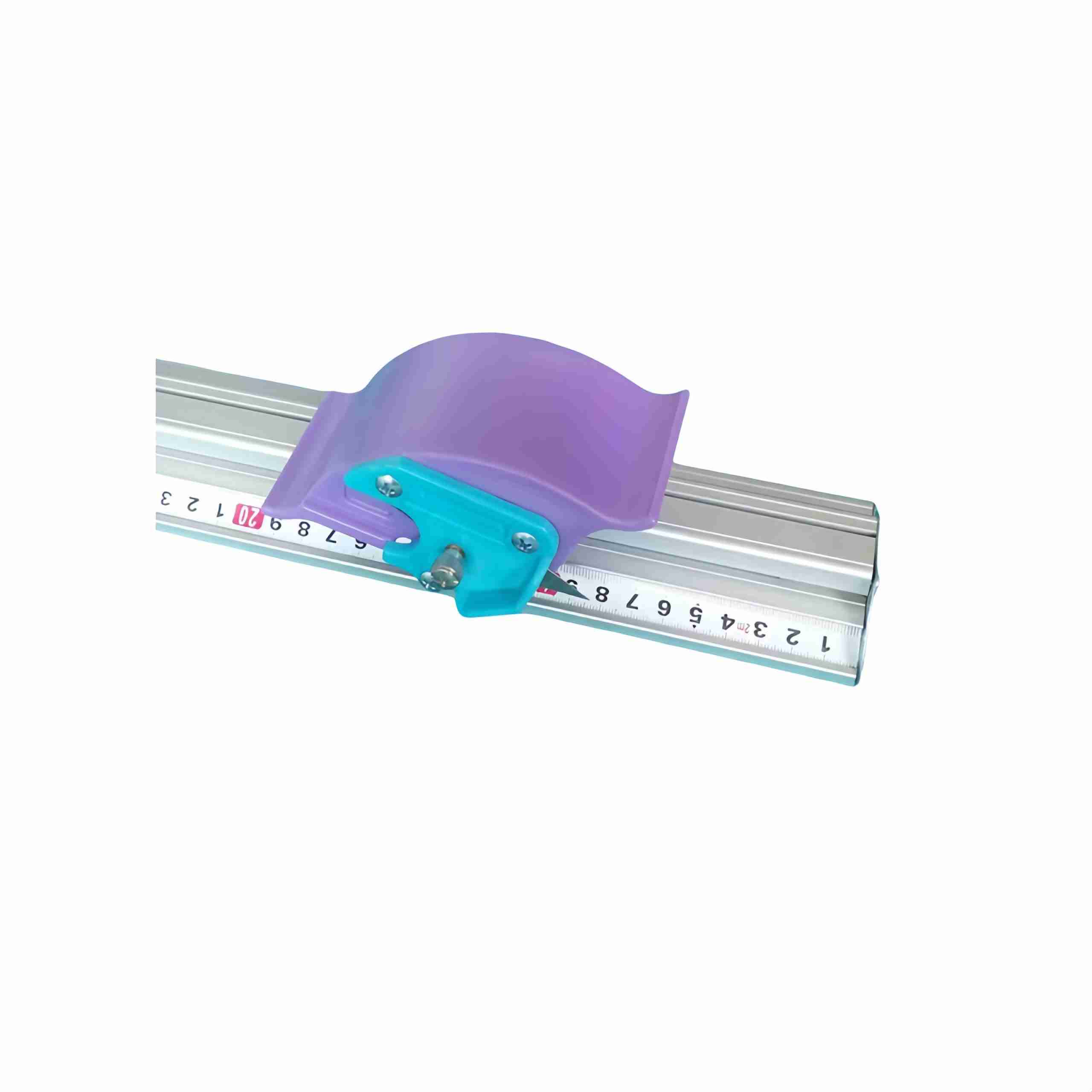
- Rigid, no-flex design — maintains a straight edge even on long cuts (up to 1500mm+)
- Clear, durable graduation marks — metric and imperial scales that remain readable after months of shop use
- Non-slip backing option — many models include a cork or rubber strip on the underside to prevent sliding during cutting
- Compatible with rotary cutters and utility knives — the flat profile works with any blade angle
Best for: Long straight cuts on vinyl, banner material, and thin substrates. Every sign shop should have at least two lengths (e.g., 600mm and 1200mm).
Aluminum Alloy Protective Ruler
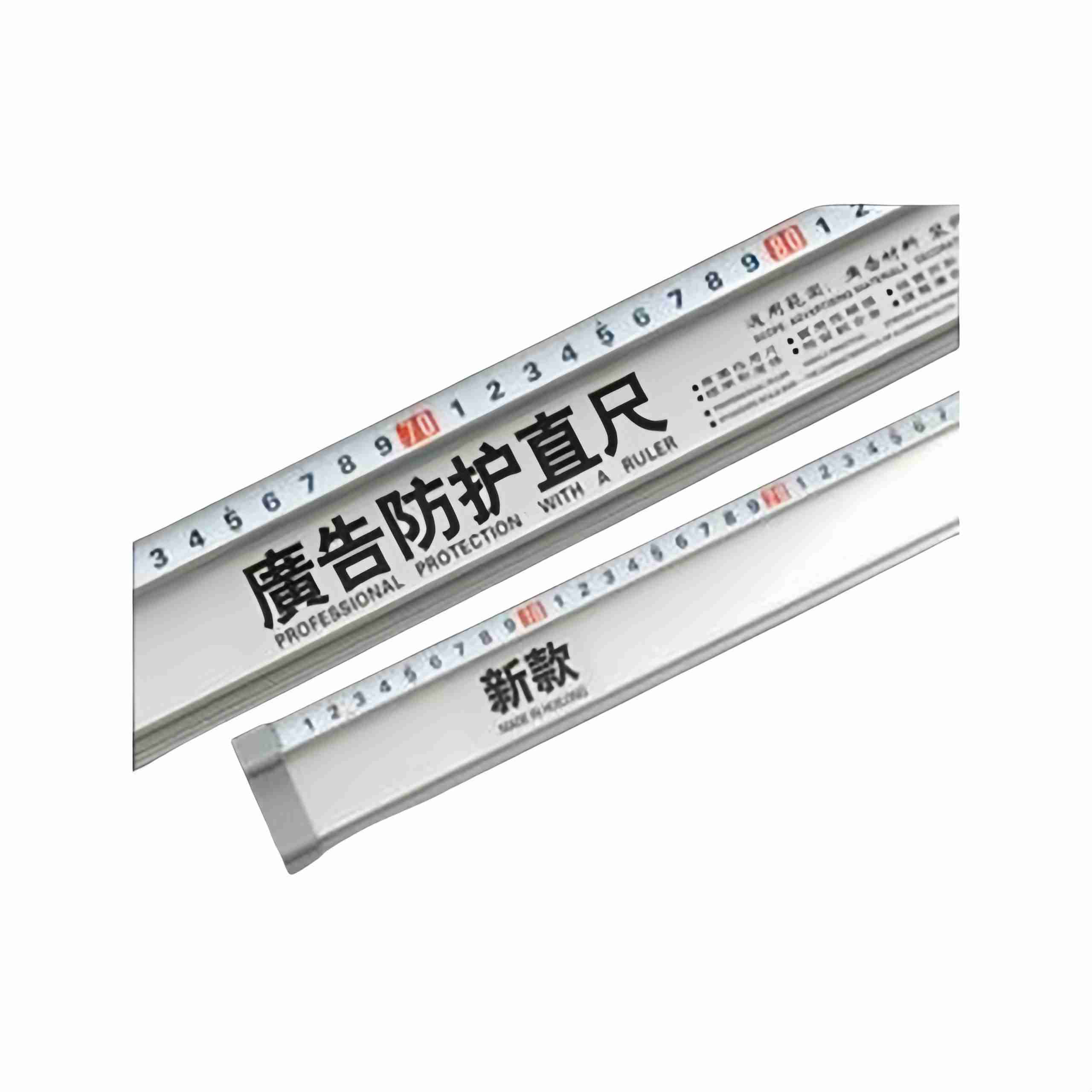
The Aluminum Alloy Protective Ruler adds a critical safety feature: a raised lip or protective edge that shields your fingers from blade slip. This matters more than you might think — blade slip injuries are among the most common minor injuries in sign shops.
- Finger guard edge — the raised profile prevents the blade from riding up and over the ruler
- Same rigid aluminum construction — no loss of cutting accuracy compared to the standard model
- Ideal for training environments — when new staff are learning cutting technique, this ruler reduces injury risk significantly
- Also works for measuring and marking — the protective edge does not interfere with layout work
Best for: Shops with multiple operators, training environments, or any situation where safety is a priority alongside precision. Many sign makers keep both types and use the protective ruler for day-to-day work.
Comparison at a Glance
| Ruler Type | Best For | Safety Edge | Typical Lengths |
|---|---|---|---|
| Aluminum Alloy Cutting Ruler | Long straight cuts, experienced operators | No | 600mm–1500mm |
| Aluminum Alloy Protective Ruler | Training, multi-operator shops, safety focus | Yes | 600mm–1200mm |
Precision cutting helps sign shops keep acrylic edges, vinyl lines, and printed graphics clean enough for professional installation.
Cutting Pad: The Unsung Hero of Clean Cuts
A Cutting Pad (self-healing cutting mat) does more than protect your workbench. It directly improves cut quality by providing a surface that:
- Allows the blade to sink slightly into the surface, enabling full material penetration without excessive downward force
- Self-heals after each cut, preventing grooves that can guide blades off-track on subsequent cuts
- Protects the workbench surface from deep blade scars that eventually affect flatness
- Provides a consistent, slightly cushioned cutting plane that improves blade control
Choosing the Right Cutting Pad
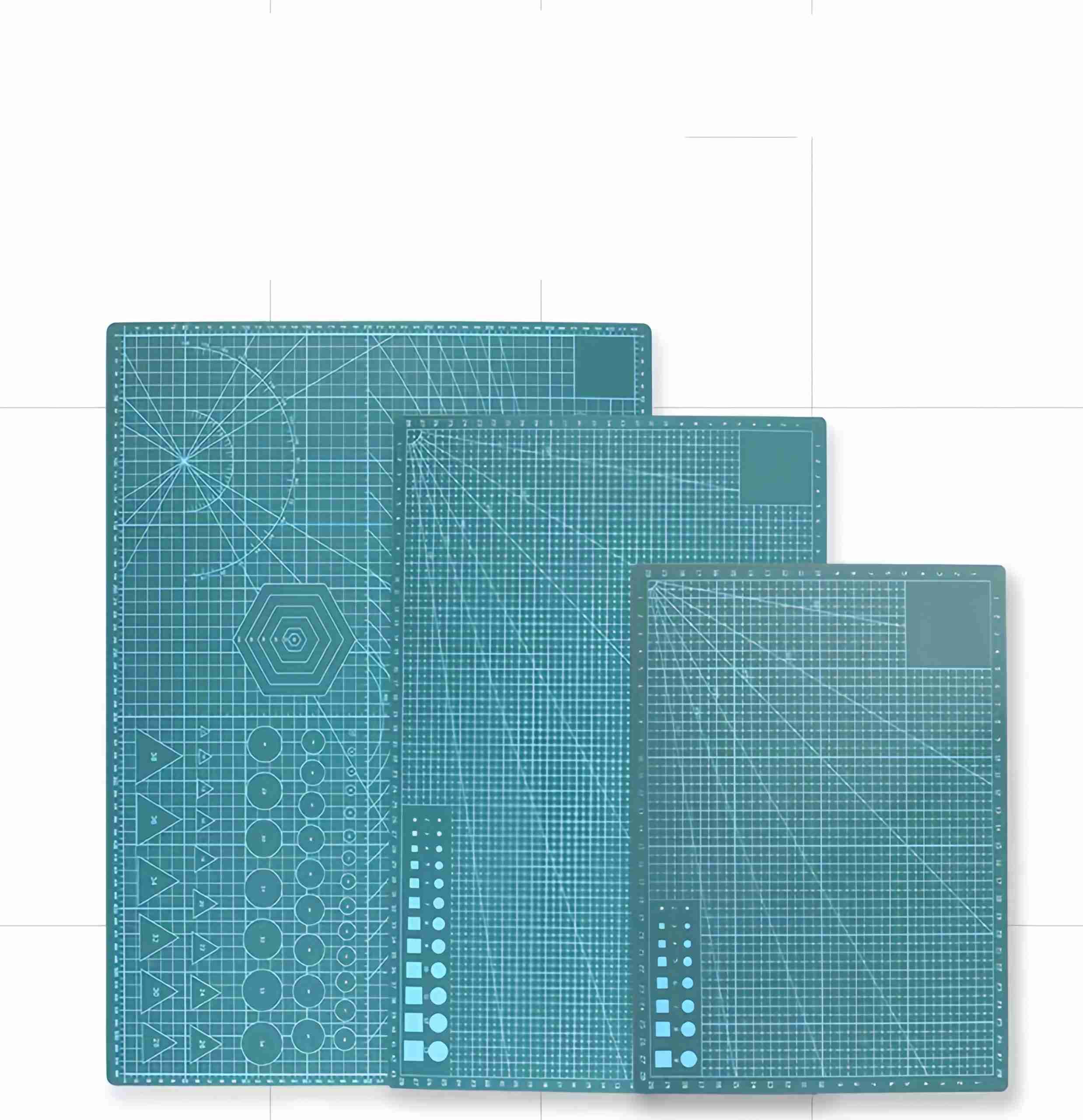
Not all cutting mats are equal. For sign shop use, look for:
- Self-healing PVC or rubber blend — cheap EVA foam mats do not self-heal and need frequent replacement
- Grid and angle markings — a mat with printed grid lines (every 10mm or 1/2 inch) doubles as a layout surface
- Size appropriate to your work — A1 (A0 for large banner work) is the practical minimum for most shops
- Non-slip backing — prevents the mat from shifting during long cuts
Cutting Pad Maintenance
A well-maintained cutting pad lasts 12–24 months in daily shop use. Extend its life with these practices:
- Rotate the mat regularly — spread wear across the surface instead of cutting in the same zone
- Keep it flat — storing a mat leaning against a wall causes it to warp; lay it flat when not in use
- Clean adhesive buildup — vinyl and tape residue on the mat surface can transfer to new material; wipe with mild detergent periodically
- Replace when cuts become visible channels — once grooves form, they will guide blades off-track and reduce cutting accuracy
Precision cutting helps sign shops keep acrylic edges, vinyl lines, and printed graphics clean enough for professional installation.
Technique: Cutting Different Sign Materials
The right ruler and mat are only half the equation. Cutting technique varies significantly by material. Here is how to approach the most common sign substrates.
Vinyl and Flexible Substrates
- Use a sharp utility blade at a 45-degree angle to the material
- Apply even pressure — let the blade do the work; forcing the cut causes jagged edges
- For thick vinyl or multi-layer materials, score lightly first, then make a second deeper pass
- Always cut on a Cutting Pad — cutting on a hard surface dulls blades faster and reduces cut control
PVC Board and Foam Board
- Use the Protective Ruler to prevent blade slip on the board edge
- Score-and-snap works for thin PVC (up to 3mm); for thicker board, use a utility knife with multiple light passes
- Support the board fully on the cutting surface — any overhang causes vibration and uneven cuts
- Replace the blade after every 10–15 linear meters of cutting to maintain clean edges
Acrylic Sheets
Acrylic requires a different approach than softer materials. Attempting to cut acrylic with a utility knife will chip or crack it. For acrylic work:
- Use a laser cutter or acrylic-specific scoring tool for thin sheets
- For thicker acrylic, use a table saw with a fine-tooth blade — never a utility knife
- If hand-cutting thin acrylic (1-2mm), use a specialized acrylic cutter with a guided straight edge
- Always deburr cut edges with fine-grit sandpaper for a professional finish
Precision cutting helps sign shops keep acrylic edges, vinyl lines, and printed graphics clean enough for professional installation.
Building Your Sign Shop Cutting Station
A well-organized cutting station improves both speed and accuracy. Essential components:
- Large self-healing cutting mat — covers the main work surface
- Two or three aluminum rulers of different lengths — one always within reach for any cut length
- Blade disposal container — used blades are a safety hazard; have a dedicated sharps container
- Good lighting — shadow-free lighting over the cutting area prevents alignment errors
- Easy-access blade storage — fresh blades should be immediately accessible; dull blades are the #1 cause of cutting injuries
You can find all cutting accessories in our knife & blade category, including rulers, mats, and replacement blades for every tool in your shop.
Precision cutting helps sign shops keep acrylic edges, vinyl lines, and printed graphics clean enough for professional installation.
Related Tools and Next Steps
Precision cutting works hand-in-hand with proper surface preparation. After cutting your materials to size, you may need to remove protective film residue or clean cut edges before installation. Our guide to Scraper Tools for Sign Installation covers the tools that complement your cutting station.
For a complete sign shop setup that goes beyond cutting, see our Essential Tools Every Sign Shop Needs guide.
Need help selecting the right cutting ruler or mat for your shop? Contact us — we can recommend the best sizes and configurations based on your typical project sizes and materials.
Precision cutting helps sign shops keep acrylic edges, vinyl lines, and printed graphics clean enough for professional installation.
FAQ
Q: Replace mat when?
A: Grooves deeper than 0.5mm or cuts not self-healing in 24h. Mats last 6-12 months at 50+ cuts/day. Rotate 180 degrees every 2-3 months.
Q: Aluminum vs plastic ruler?
A: Aluminum for accuracy-critical. Plastic for rough. Aluminum: 0.1mm/m accuracy maintained; plastic warps 1-2mm/m.
Q: Blade angle for vinyl?
A: 30 degrees for thin vinyl (0.05-0.1mm), 45 degrees for thick vinyl/PVC foam, 60 degrees for cardboard only.
Q: Prevent ruler slipping?
A: Cork or rubber backing tape. T-square for cuts over 30cm.
Q: Optimal lighting?
A: 500-750 lux, 45-degree angle. 4000-5000K LED for best contrast.
Precision cutting helps sign shops keep acrylic edges, vinyl lines, and printed graphics clean enough for professional installation.
Limitations
Manual cutting of vinyl, acrylic (up to 3mm), PVC foam board, paper, card stock. Not for:
- CNC or laser cutting
- Metal above 0.5mm
- Glass scoring
Precision cutting helps sign shops keep acrylic edges, vinyl lines, and printed graphics clean enough for professional installation.
Sources
- ISO 3650: GPS Length standards
- Olfa, NT Cutter, Fiskars specifications
- Workshop measurement data, 2020-2025
Last reviewed: June 23, 2026.