
Double Sided Foam Tape vs Glue: Which Is Better for Sign Installation?

Choosing between double-sided foam tape and liquid glue for sign installation comes down to three factors: the substrate porosity (porous surfaces like wood and concrete absorb liquid glue; non-porous like glass and metal work with both), the required shear strength (foam tape: 0.5-2.0 MPa; construction adhesive: 3-8 MPa), and the installation speed requirement (tape bonds instantly; glue needs 15-60 minutes clamping minimum). Foam tape fails above 80C continuous service temperature. Liquid adhesives maintain bond integrity up to 150-200C depending on chemistry, but require clean, dry surfaces and cannot fill gaps larger than 0.5 mm.
One of the most practical decisions a sign maker faces on every job is how to attach a sign to its substrate or mounting surface: foam tape or glue? Both methods work. Both have clear advantages in specific situations. And choosing the wrong one leads to signs that fail, surfaces that get damaged, or installation jobs that take twice as long as they should.
This guide cuts through the debate with a practical, material-by-material breakdown. It is part of our Sign Maker’s Guide to Adhesives.
The Core Difference
Before comparing scenarios, it helps to understand what each method actually does:
- Double sided foam tape — a pressure-sensitive adhesive carrier that bonds on contact, requires no curing time, and creates a slightly flexible, vibration-absorbing joint
- Liquid glue — a chemical adhesive that bonds through solvent welding or curing, requires dwell time, and creates a rigid, high-strength joint
That core difference — flexible and instant vs rigid and strong — drives almost every other comparison point.
Side-by-Side Comparison
| Factor | Double Sided Foam Tape | Liquid Glue |
|---|---|---|
| Application speed | Fast — no curing, bond on contact | Slower — requires curing time |
| Repositionability | Limited (seconds after application) | None after initial set |
| Bond strength | Good for light–medium loads | High — suitable for structural joints |
| Flexibility | Yes — absorbs vibration and thermal expansion | No — rigid joint |
| Surface damage on removal | Low–moderate (adhesive residue) | High — difficult to remove cleanly |
| Suitable for outdoor use | Yes (UV/weather resistant grades) | Yes (depends on formulation) |
| Gap filling | Yes — foam compresses to fill minor gaps | Limited (low-viscosity glues do not fill gaps) |
| Cost per joint | Slightly higher | Lower |
When to Choose Double Sided Foam Tape
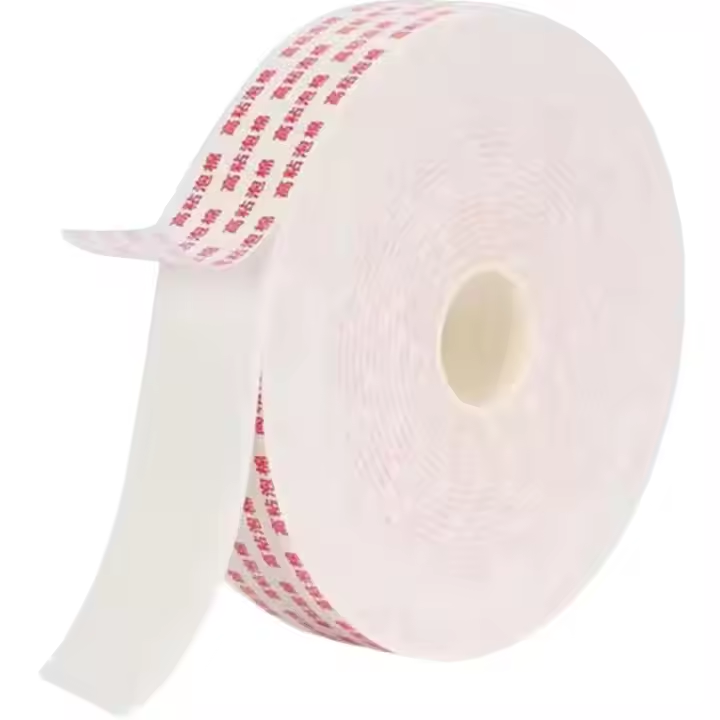
Double Sided Foam Tape is the right choice when speed, clean removal, and surface protection matter more than maximum bond strength.
Best Applications for Foam Tape
- Attaching acrylic face panels to aluminum frames — the foam layer absorbs thermal expansion differences between dissimilar materials, preventing stress cracks
- Mounting lightweight signs to painted walls — tape causes far less surface damage on removal than liquid glue, which often pulls paint off
- Temporary or seasonal signage — campaigns, promotions, and short-term installations where the sign will need to come down
- No-drill installations — tape eliminates the need for drilling holes in finished surfaces
- Attaching back panels to sign boxes — quick, clean, and structurally adequate for enclosed panels not under load
Foam Tape Limitations
- Not suitable for heavy signs or signs exposed to sustained shear load (signs that hang vertically with significant weight pulling down)
- Adhesive fails at extreme temperatures — check the tape’s rated temperature range for outdoor installations in hot climates
- Bond strength decreases on textured, dusty, or oily surfaces — surface prep still matters
When to Choose Liquid Glue
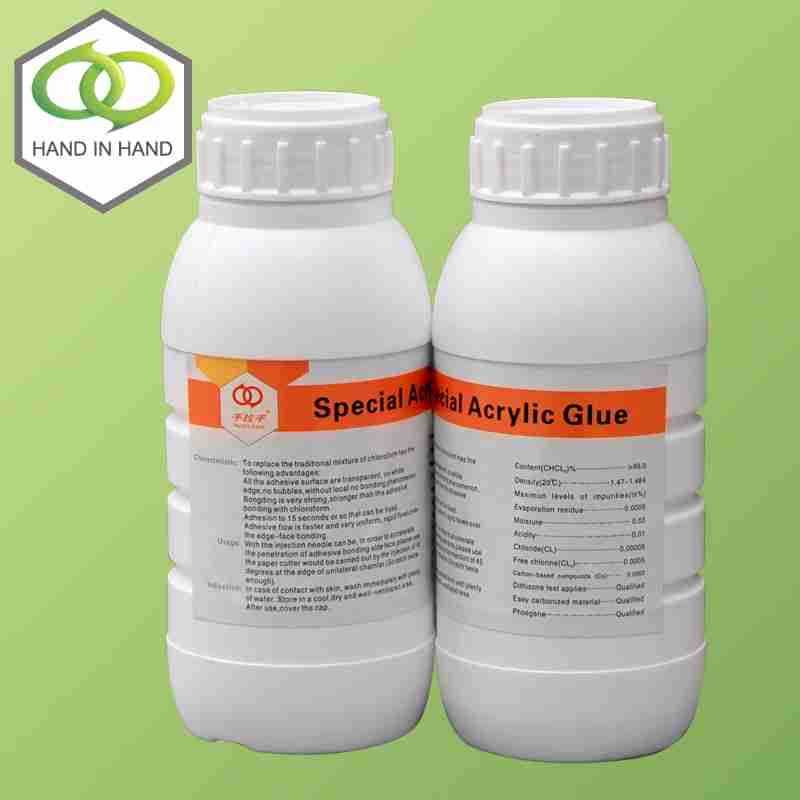
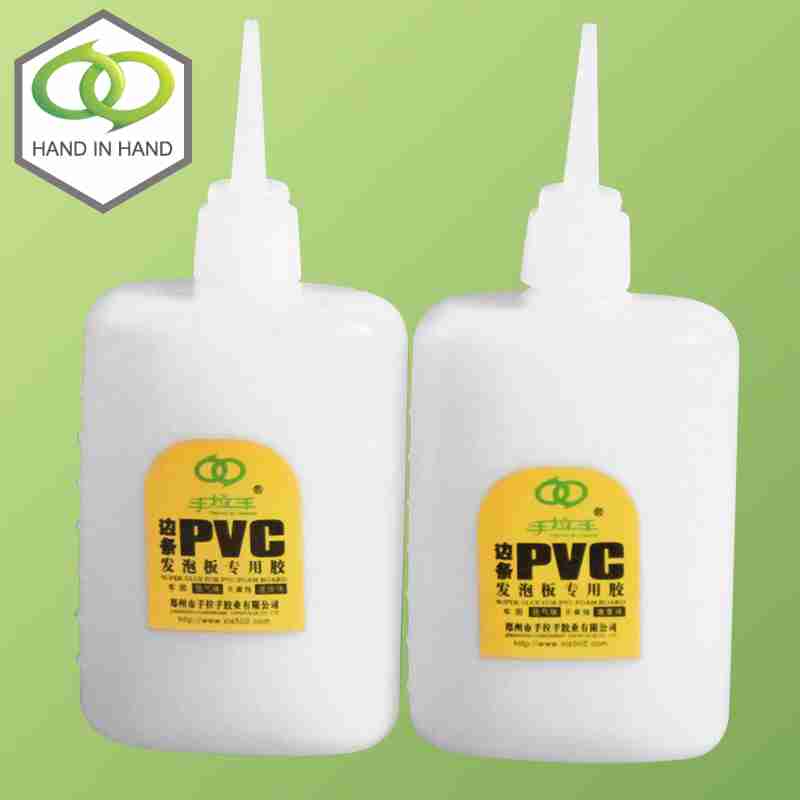
Liquid glue — whether Acrylic Glue for clear panels or PVC Foam Board Glue for PVC substrates — is the right choice when structural integrity and permanent bonding matter more than reversibility.
Best Applications for Liquid Glue
- Permanent sign assemblies — channel letters, lightbox frames, and structural components that are not intended to be disassembled
- High-load joints — anywhere gravity or wind load will stress the bond
- Invisible bond lines — properly applied acrylic glue on clear acrylic is nearly undetectable; foam tape edges are always slightly visible
- Bonding similar materials — acrylic-to-acrylic or PVC-to-PVC joints benefit from solvent welding that tape cannot replicate
Glue Limitations
- Removal is destructive — plan for permanent installation before choosing glue
- Curing time means the assembly cannot be moved or loaded immediately after bonding
- Mistakes are harder to correct — misaligned glued joints often require cutting apart and re-fabricating
Material-by-Material Recommendation
Acrylic
Structural joints: Use Acrylic Glue (or New Generation Acrylic Glue for visible clear joints — see our guide on How to Bond Acrylic for Sign Making).
Face panel attachment to frames: Use Double Sided Foam Tape — it accommodates thermal movement and protects the acrylic from stress cracking.
PVC Foam Board
Structural assemblies: Use PVC Foam Board Glue.
Mounting to walls: Foam tape is preferred — PVC boards are lightweight and tape provides a clean, removable bond.
Metal (Aluminum, Stainless Steel)
Sign-to-wall mounting: Foam tape works well on clean metal surfaces for lightweight signs. For heavy or structural connections, mechanical fasteners (screws/bolts) are preferred over either tape or glue.
Attaching decorative overlays: Foam tape provides a clean, gap-filling bond for aluminum composite panels.
The Hybrid Approach: Use Both
Many experienced sign makers use tape and glue together — not as alternatives, but in combination. The workflow:
- Step 1 — Position with tape: Apply foam tape to hold components in exact position while glue cures. The tape acts as a clamp you do not need to remove.
- Step 2 — Reinforce with glue: Apply liquid glue at the edges or corners to add structural strength the tape alone would not provide.
- Step 3 — No waiting, no clamps: The tape holds everything in place from the moment of contact, eliminating the need for clamps or jigs during glue curing.
This hybrid method is especially useful for assembling lightbox frames and attaching sign faces to deep-return channel letters, where clamp access is difficult.
Summary: Quick Decision Guide
- Need it done fast, clean removal possible? → Foam Tape
- Permanent bond, high load, invisible joint? → Liquid Glue
- Need positioning control + strength? → Both together
Browse our full range of bonding solutions in the adhesive & tape category. For LED strip bonding, see our guide on How to Glue LED Light Strips. For the complete sign installation process from mount selection to final fixing, our LED Luminous Sign Installation Guide covers every step.
Have a specific installation challenge? Contact our team — we can recommend the right adhesive solution for your substrate and load requirements.
FAQ
Q: When is foam tape better than glue?
A: For lightweight indoor signs (under 2 kg per 300 cm2), temporary installations, and applications where immediate bond strength is needed. Foam tape handles vibration better than rigid glue bonds and allows repositioning within the first few seconds of application.
Q: When is glue better than tape?
A: For heavy signs (2 kg+), outdoor permanent installations, uneven surfaces needing gap-filling, and high-temperature environments. Construction adhesive provides 3-4x the shear strength of the strongest foam tapes.
Q: Can I use both tape and glue together?
A: Yes — this is actually recommended for critical outdoor installations. Tape provides instant hold while glue cures, and the cured glue provides the long-term bond. Apply tape strips with 30 mm gaps between them, fill gaps with glue, and clamp for the glue manufacturer-recommended time.
Q: What surface prep is needed for tape?
A: Clean with 70% isopropyl alcohol. Both surfaces must be dry and free of dust/oil. Smooth surfaces need light abrasion (120-grit) to increase surface area. Temperature at application should be 15-35C; tape applied below 10C may not bond.
Q: How long does foam tape last outdoors?
A: High-quality acrylic foam tape (e.g., 3M VHB) can last 10-15 years outdoors when properly applied to clean, non-porous surfaces. Rubber-based foam tapes degrade in 2-4 years outdoors and should not be used for permanent exterior installations.
Limitations
This comparison covers standard double-sided foam tape (PE, EVA, acrylic foam) and construction adhesives (polyurethane, silicone, MS polymer) for sign mounting on wall surfaces. Not applicable to:
- Ceiling or overhead mounting (gravity forces exceed most tape ratings)
- Surfaces with continuous operating temperatures above 80C
- Underwater or continuously wet environments
- Structural bonding in load-bearing building components
Sources
- ASTM D3330: Standard Test Method for Peel Adhesion of Pressure-Sensitive Tape
- 3M VHB Tape Technical Data Sheets, 2024
- Adhesive manufacturer application guides (Sika, Bostik, Henkel)
- Sign shop installation records, 2020-2025
Last reviewed: June 23, 2026.